 Engagement ring with one diamond
 Engagement ring with scattered diamonds
 Wedding ring for her
 Wedding ring for him


 About the brand
 How diamonds grow
 Blog
Blog
 Solo community
 Media
Media
 About diamonds in simple words

 Ukraine
 Europe
 United States
GIA Certificate: what a GIA certificate is and why you should not buy a diamond without one
GIA Certificate: what it is, what characteristics it contains, and how to check it online. We explain the 4Cs system, the main sections of the report, and the differences between GIA, IGI, and HRD.
30.08.2026
from Julia Kusher
6 min read
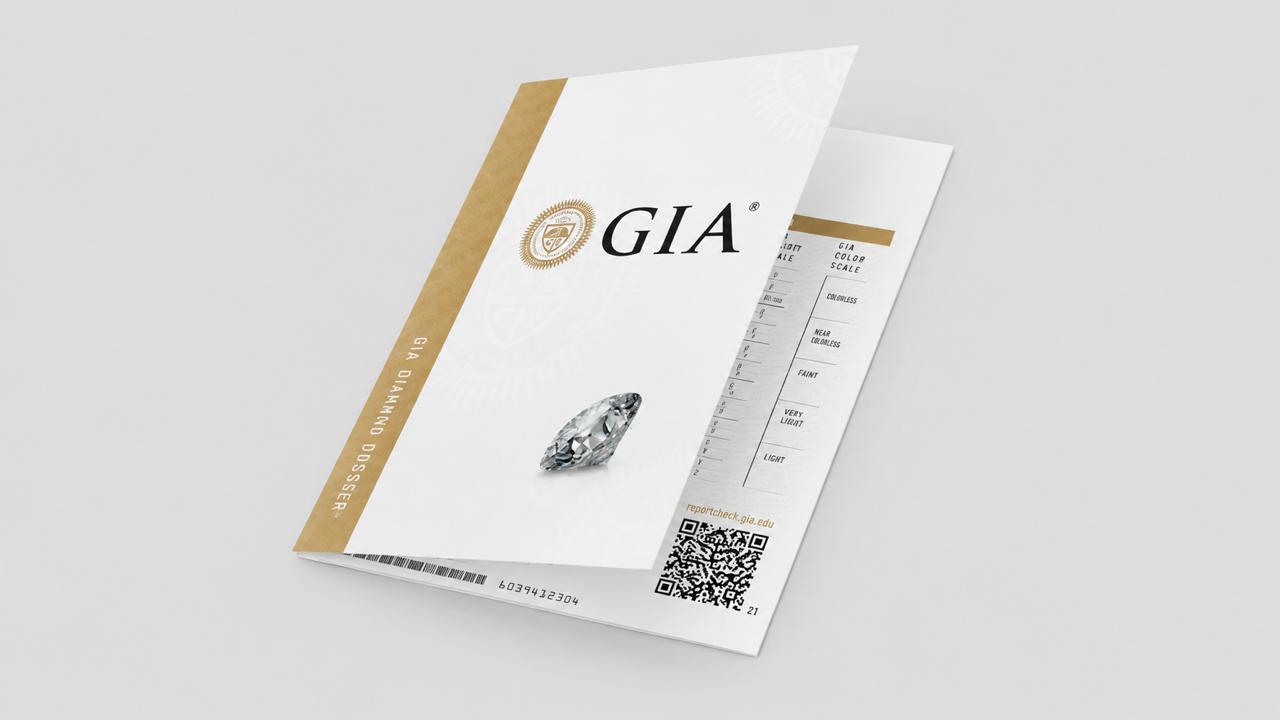
A GIA certificate is an independent document containing the results of a gemological examination of a diamond. GIA (the Gemological Institute of America) is a nonprofit organization founded in 1931 that developed the 4Cs system — an international approach to evaluating diamonds based on color, clarity, cut, and carat weight.
A GIA report contains the characteristics of a specific stone, its unique identification number, and, for applicable reports, a laser inscription of this number on the diamond’s surface. This makes it possible to match the document to a specific stone and verify whether the information stated in the report corresponds to the diamond’s actual characteristics.
Therefore, a GIA certificate is essentially a diamond’s passport. It helps you understand exactly what you are buying, compare the characteristics of different stones, and verify information about a specific diamond in the laboratory’s database.
What Is GIA and Why Are Its Reports Trusted?
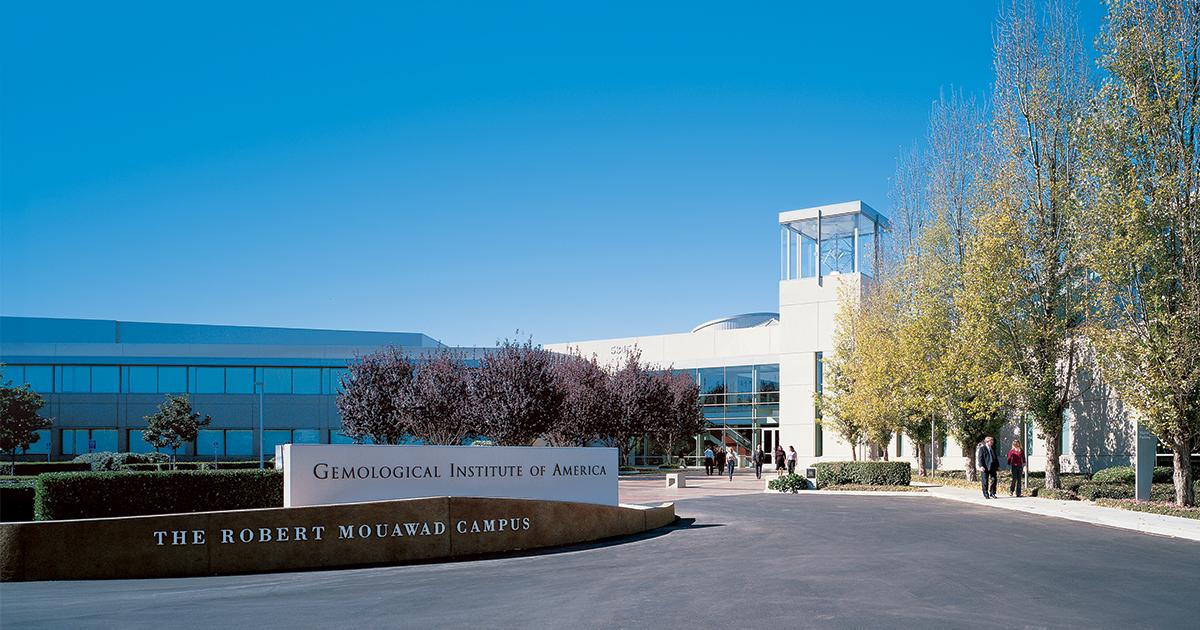
The Gemological Institute of America is one of the world’s best-known independent gemological organizations. Its activities include research, education, and laboratory services. GIA’s independence is supported not only by its organizational status but also by the operating principles of its laboratories: they are located in different countries around the world, including the United States, Japan, India, South Africa, and Israel. In addition, stones are submitted for examination without information about their owner, so the expert does not know who owns the diamond and cannot take this information into account when evaluating it. These principles help ensure impartial results.
It is important to understand that GIA does not determine the price of a gemstone. A laboratory report describes its characteristics but is not an appraisal of its market value. The document records all key parameters of the gemstone. In other words, the report answers the question “What kind of diamond is this?” rather than “How much is it worth?”
The independence of the laboratory is particularly important for the buyer: the stone’s characteristics are determined through gemological examination, rather than being based solely on the seller’s claims.
The 4Cs: What Exactly Is Evaluated in a Diamond?
This system consists of four main characteristics. Together, they help describe a diamond’s quality and understand how one stone differs from another.
-
Carat Weight — the weight of the diamond. It shows the actual weight of the stone, where the carat is a unit of weight rather than a measurement of its visual size.
-
Color — evaluates the degree of a diamond’s colorlessness.
-
Clarity — reflects the number, size, nature, and location of internal inclusions and external characteristics.
-
Cut — describes the proportions, symmetry, and quality of the diamond’s cut, which have a significant influence on how it interacts with light.
If you want to understand the system in more detail, you can read more about the 4Cs.
At the same time, these are not the only details worth checking. A report may also include measurements, finish characteristics, fluorescence, proportions, and a graphic representation of the stone’s characteristics.
How to Read a GIA Certificate: A Breakdown of the Main Sections
At first glance, a GIA certificate may seem like a complicated collection of terms and numbers. In reality, it can be read step by step — from identifying the stone to reviewing its main characteristics.
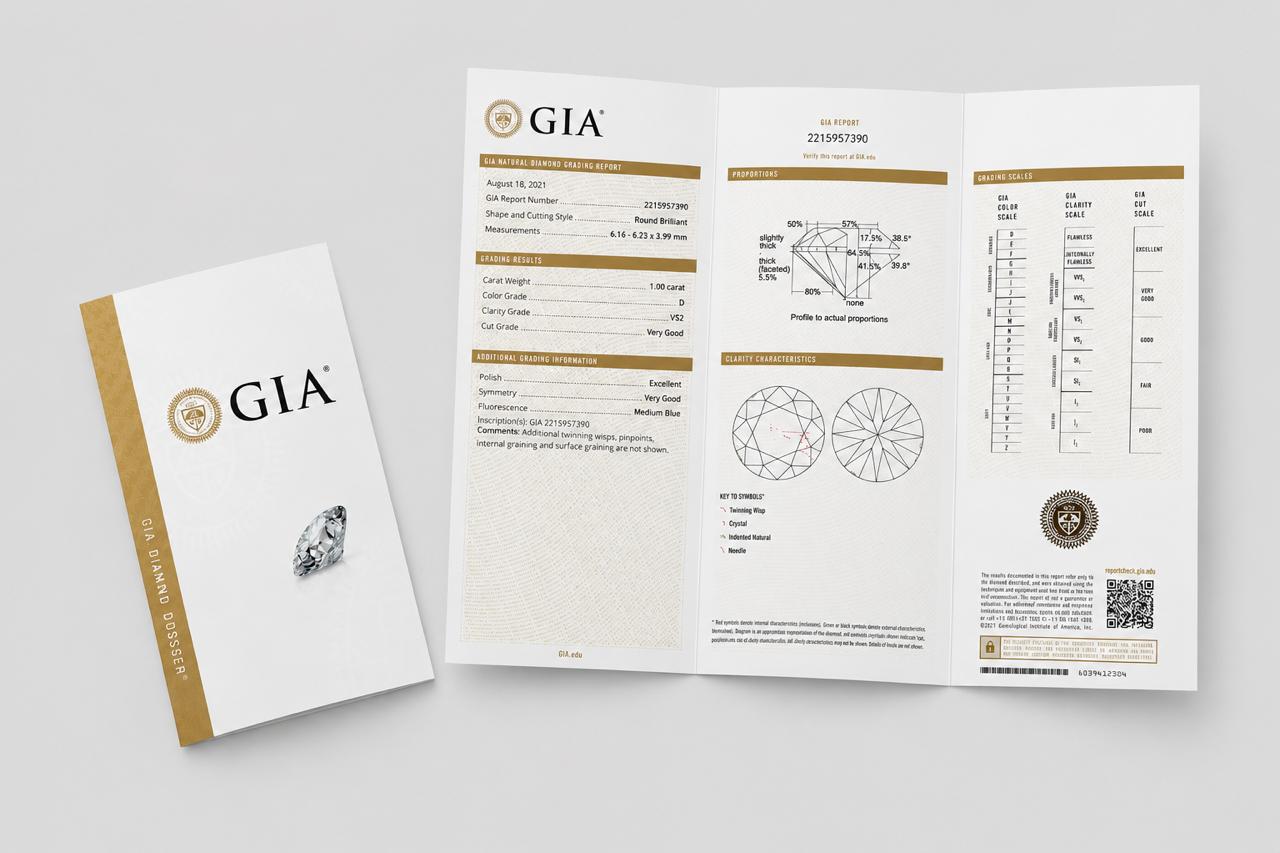
1. Top Section: Diamond Identification
The upper part of the document contains the basic information used to identify the stone:
-
GIA report number (certificate number);
-
date of issue;
-
shape and cutting style;
-
diamond measurements;
-
basic information about the stone.
2. Proportions: Crown, Girdle, Pavilion, and Culet
The central part of the report may include a diagram of the diamond’s proportions. It helps explain how the stone is structured.
Crown — the upper part of the diamond above the girdle. Light enters and exits the stone through this area, so its proportions are important for the diamond’s optical properties.
Girdle — the widest perimeter of the diamond, which essentially separates the crown from the pavilion. When laser inscription is present, the report number can be found on the girdle.
Pavilion — the lower part of the diamond below the girdle. Its depth and proportions affect how light behaves inside the stone.
Culet — the bottom point of the diamond, located at the center of the pavilion. It may be absent or have different dimensions depending on the cut.
3. Plotting: A Map of the Stone’s Characteristics
Another important element is the plotting diagram — a graphic representation showing internal inclusions and certain external characteristics of the diamond.
From a buyer’s perspective, this is important for a practical reason: the combination of the clarity grade and the inclusion plot creates a kind of visual profile of the specific stone.
That is why two diamonds with the same clarity grade are not necessarily identical. What matters is not only the number of characteristics but also their type, location, and visibility.
4. Bottom Section: Quality Characteristics
The lower part of the document contains the main grading results. This is where the key characteristics of the diamond are listed, including color, clarity, cut, and carat weight.
For classic colorless diamonds, color is graded on the D–Z scale: D represents the highest degree of colorlessness, while moving toward Z indicates increasing yellow or brown coloration. Clarity is graded on the FL–I3 scale — from Flawless, meaning no inclusions or blemishes visible under the grading conditions, to I3, where inclusions have the greatest impact on the stone’s appearance.
Special attention is also given to:
-
polish — the quality of the diamond’s surface finish;
-
symmetry — how precisely the facets and cut elements are positioned in relation to one another;
-
fluorescence — the diamond’s reaction to ultraviolet radiation;
-
proportions and measurements of the stone;
-
any characteristics or treatments identified by the laboratory.
These parameters should not be considered in isolation. For example, a good color grade does not automatically compensate for poor cut quality, while a higher carat weight does not necessarily mean that the stone will look proportionally larger.
What Types of GIA Certificates and Reports Are Available?
The document format depends on the type and origin of the diamond.
GIA reports for natural diamonds currently include, among others, the Diamond Grading Report — a comprehensive report with a detailed evaluation of the diamond’s main characteristics and a plotted clarity diagram. For natural D–Z diamonds weighing 0.15 carats or more, the Diamond Dossier is also available — a more compact format containing grading results but without a plotted clarity diagram.
There are also electronic report formats. Therefore, the name of the document itself should not be the only criterion used for verification — it is important to consider the type of stone and the current GIA report format.
For laboratory-grown diamonds, GIA uses a separate reporting and evaluation system. The current Laboratory-Grown Diamond Quality Assessment format for colorless and near-colorless diamonds provides an overall quality assessment of Premium or Standard, while the laser inscription contains the words “Laboratory-Grown” and the GIA assessment number. For laboratory-grown colored diamonds, the Colored Diamond Report is available as a separate report covering color, clarity, and growth and treatment characteristics.
Therefore, when discussing GIA diamonds, it is always important to first determine whether the stone is natural or laboratory-grown and only then compare the report format.
Why You Should Not Buy a Diamond Without a GIA Certificate
The mere presence of a document does not guarantee quality — it is important to verify who issued it and whether the information corresponds to the specific stone. An independent report is primarily needed to ensure that the stated characteristics can be verified when purchasing a diamond.
Before buying, make sure that:
-
the diamond’s characteristics in the report match the seller’s description;
-
the weight, shape, and measurements correspond to the specific stone;
-
the report number can be found in the laboratory’s database;
-
the laser inscription matches the report number, if applicable;
-
the document does not contain obvious errors or inconsistencies;
-
the seller allows you to verify the report independently of their own website.
How to Check a GIA Certificate Online in 1 Minute
You do not need to contact the seller or search third-party databases. GIA has its own service where you can find information using the report number and compare it with the details in the document.
The process is simple:
-
Find the report number on the document.
-
Enter the number in the search field on the GIA Report Check website.
-
Compare the information in the database with the physical document.
-
If the diamond has a laser inscription, check that the number matches.
-
Compare the stone’s shape, carat weight, measurements, and other characteristics.
The laser inscription is extremely small and usually requires approximately 10× magnification, so a jeweler’s loupe or microscope is used to examine it.
GIA vs. IGI / HRD: Is There a Difference?
GIA is not the only international gemological laboratory. IGI and HRD also operate in the market, and their reports are used to evaluate and identify diamonds.
GIA has traditionally been considered a leading standard for grading natural diamonds. For laboratory-grown diamonds, IGI is widely recognized internationally as a leading grading laboratory. At the same time, both laboratories have their own standards and report formats, so when choosing a report, it is important to consider the stone’s origin and the type of report.
For buyers, a GIA certificate is an independent document that confirms the characteristics of a specific natural diamond and allows the information to be verified through the laboratory’s official database. This is why GIA remains one of the most authoritative references when evaluating natural diamonds.
GIA Certificates and SOLO Laboratory-Grown Diamonds
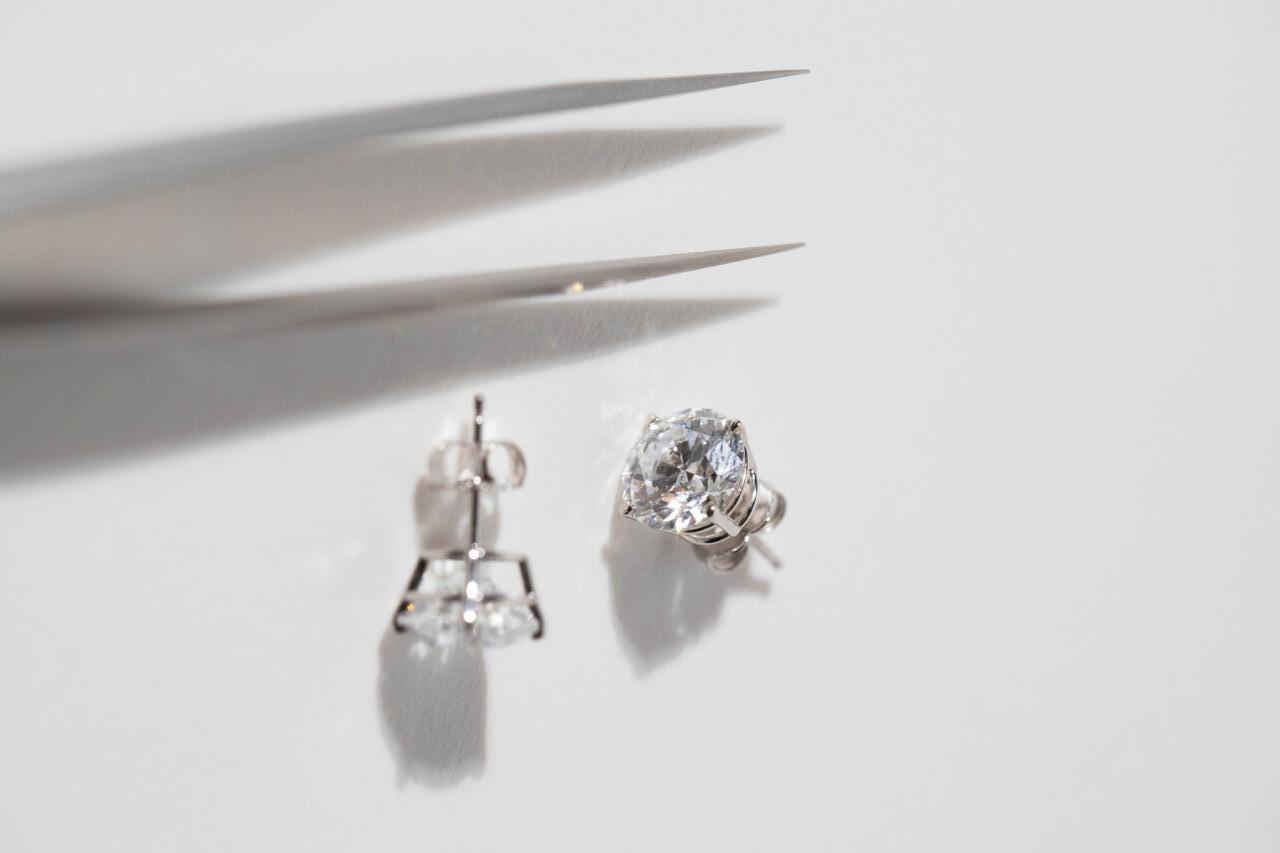
GIA certifies not only natural diamonds but also laboratory-grown diamonds. For these stones, the institute uses a separate report format that clearly indicates their origin, while the stone itself is inscribed with the words “Laboratory-Grown” and the report number.
For SOLO for Diamonds, certification helps confirm the characteristics of the stones and ensure transparency of information about them. Learn more about the brand’s quality standards and guarantees in the SOLO for Diamonds quality guarantee article.
And to learn how laboratory-grown diamonds are created and how HPHT and CVD technologies differ, read HPHT and CVD: How Diamonds Are Grown.
A Certificate Is Not a Formality — It Is Your Protection
The appearance of a diamond jewelry piece alone is not enough to determine all of its characteristics. Professional gemological equipment and laboratory examination are used for this purpose.
A certificate from an independent laboratory contains the main parameters and information about the stone, allowing them to be verified against the laboratory’s official record. This helps you evaluate the diamond before choosing the jewelry piece.
Only after that can you focus on what is immediately visible: the cut, color, and design, and choose a ring or earrings with classic colorless diamonds, or a piece featuring colored SOLO diamonds.
FAQ
Can a GIA certificate be verified without the internet?
How much does GIA certification cost?
Does GIA certify laboratory-grown diamonds?


you may also be interested in
14.08.26
7 myths about lab-grown diamonds that are time to dispelAre lab-grown diamonds real or not? We explain in simple terms how they differ from natural diamonds and what to consider when choosing a piece of jewelry. We separate facts from common misconceptions to help you better understand the stone and make an informed choice.
read22.07.26
Diamond engagement ring. A tradition that became a symbol of loveA marriage proposal is one of the most important moments in the lives of two people. Today, it is almost impossible to imagine it without a piece of jewelry that has become a universal symbol of commitment, trust, and the desire to build a future together.
read05.08.26
What are lab-grown diamonds: a complete guide in simple wordsLab-grown diamonds are real gemstones that differ from natural diamonds only by their origin. Discover everything you need to know about HPHT and CVD technologies, certification, differences from natural diamonds, and key factors to consider when choosing a diamond.
read05.08.26
HPHT vs. CVD: how are diamonds really grown in a laboratory?Discover how modern technology transforms carbon into a real diamond, the stages each crystal goes through, and the key differences between the HPHT and CVD growing methods.
read whatsapp
 Telegram
 EMail
EMail