 Engagement ring with one diamond
 Engagement ring with scattered diamonds
 Wedding ring for her
 Wedding ring for him


 About the brand
 How diamonds grow
 Blog
Blog
 Solo community
 Media
Media
 About diamonds in simple words

 Ukraine
 Europe
 United States
7 myths about lab-grown diamonds that are time to dispel
Are lab-grown diamonds real or not? We explain in simple terms how they differ from natural diamonds and what to consider when choosing a piece of jewelry. We separate facts from common misconceptions to help you better understand the stone and make an informed choice.
14.08.2026
from Julia Kusher
6 min read
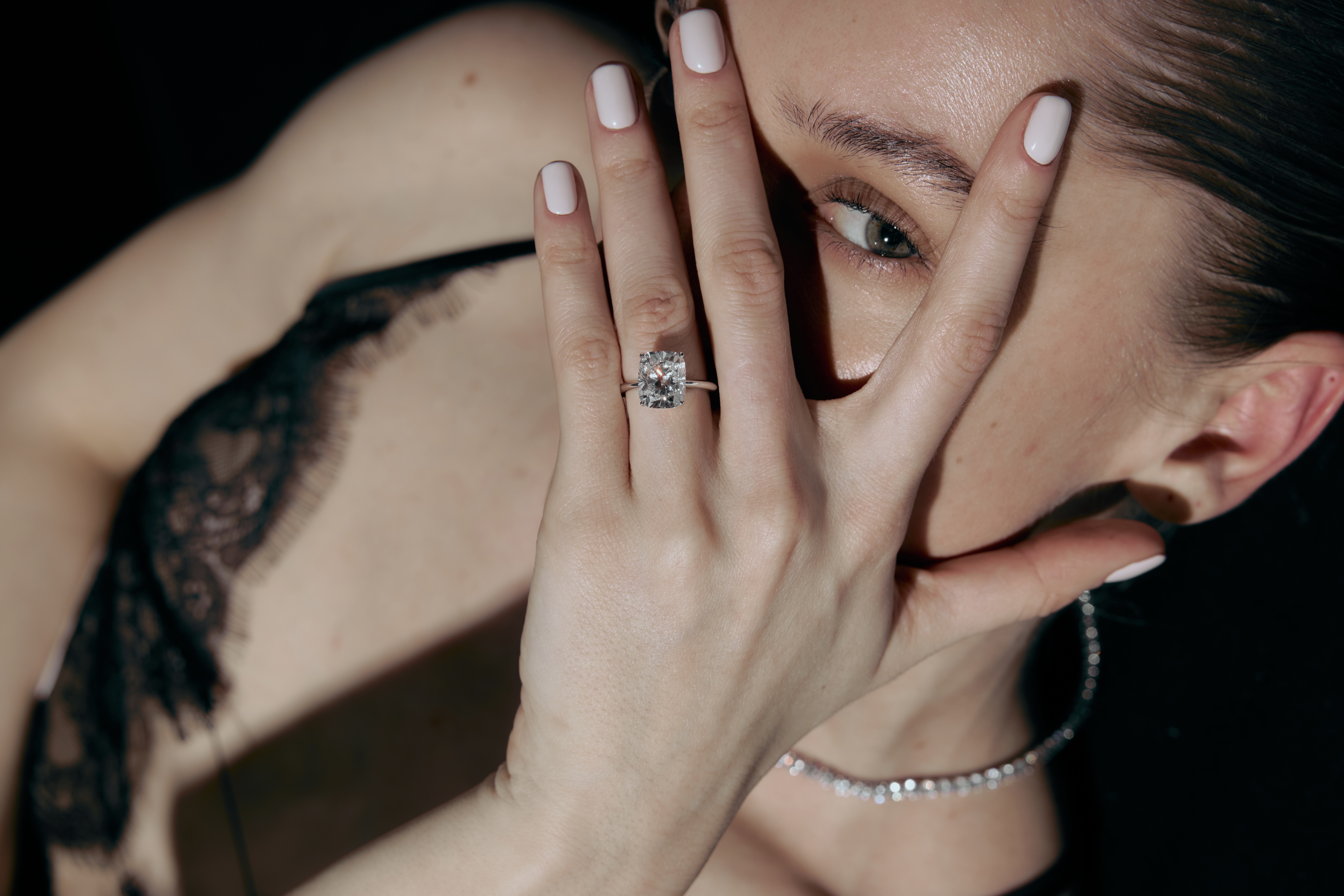
Surrounding lab-grown diamonds, there are still many misconceptions. “It’s not a real stone,” “if it’s cheaper, it must be worse,” “lab-grown diamonds have no value” — these are claims you can still hear today, even though the technologies used to create them have long moved beyond the experimental stage.
But what are lab-grown diamonds really? They are diamonds grown under controlled conditions using modern technologies. In terms of their fundamental physical and chemical properties, they do not differ from natural diamonds.
The first reproducible synthesis of diamond was demonstrated by General Electric on December 16, 1954. Today, HPHT and CVD technologies make it possible to produce gem-quality diamonds that are virtually identical to natural diamonds in their chemical, physical, and optical properties.
In this article, we take a closer look at the most common myths about lab-grown diamonds without marketing exaggerations and explain why these misconceptions persist — with facts, figures, and a professional perspective on what really matters when choosing a diamond.
Myths and facts at a glance
|
Myth |
The truth |
|---|---|
|
Lab-grown diamonds are a temporary trend. |
Diamond synthesis technologies have existed for more than 70 years. |
|
If a diamond is cheaper, it must be worse. |
The lower price is primarily related to the diamond’s origin and production costs, not the quality of the crystal. |
|
Lab-grown diamonds have no value. |
Their main value lies in their beauty, quality, and personal meaning rather than their investment potential. |
|
Lab production harms the environment just as much as mining. |
Growing diamonds does not require ore extraction or large-scale earth displacement, while the carbon footprint depends on the source of electricity. |
|
Lab-grown diamonds cannot be certified. |
They can be identified and certified by independent gemological laboratories. |
|
Only a natural diamond is suitable for an engagement ring. |
Lab-grown diamonds have the same hardness, brilliance, and crystal structure and have long been used in jewelry. |
|
All lab-grown diamonds are the same. |
They differ in color, shape, size, clarity, cut, and growing technology. |
Myth 1. Lab-grown diamonds are just a trend that will soon pass
It is difficult to call lab-grown diamonds a temporary trend: their history spans more than 70 years.
In December 1954, a team at General Electric announced the successful reproduction of diamond synthesis using the high-pressure high-temperature (HPHT) method. The first crystals were small and were primarily used for industrial purposes. Gem-quality diamonds of suitable size appeared much later: in 1971, GE presented gem-quality synthetic diamonds that were studied by GIA as gemological specimens.
Today, lab-grown diamonds are no longer a niche technology but a significant part of the global jewelry industry. According to a GIA estimate published in 2024, lab-grown diamonds were expected to account for around 20% of the global jewelry diamond market in 2025.
These diamonds should therefore be viewed not as an experimental alternative to natural stones, but as a distinct segment of the modern jewelry industry. Their origin is different, but that does not change the fact that they are diamonds with the same fundamental structure and properties.
Myth 2. They are cheaper, so they must be worse
Price and quality are not the same thing.
A natural diamond forms deep within the Earth over millions or even billions of years, after which it must be discovered, mined, processed, and transported through the supply chain. A lab-grown diamond is produced under controlled conditions using HPHT or CVD technology. Its origin and production process largely explain the difference in price.
But this does not mean that a lab-grown diamond automatically has lower-quality characteristics.
Both natural and genuine lab-grown diamonds are evaluated according to the same fundamental quality parameters — color, clarity, cut, and carat weight — because their key properties are identical. In terms of hardness, both belong to the hardest naturally occurring materials: diamond ranks 10 on the Mohs scale. GIA explicitly states that lab-grown diamonds are real diamonds with essentially the same chemical, physical, and optical properties as natural diamonds.
So the idea that “cheaper means worse” simply does not apply here. It incorrectly equates the price of a diamond with its quality.

Myth 3. Lab-grown diamonds have no value or quickly lose their value
It is worth being honest here: a lab-grown diamond should not be purchased as a financial investment.
In the secondary market, jewelry in general is often resold for less than its original retail price. This applies not only to lab-grown diamonds. The price of a finished piece includes the designer’s work, metal, cutting, brand, retail markup, and other components that may not be recovered when the piece is resold.
For lab-grown diamonds, this issue is particularly relevant because of the rapid scaling of production technologies and declining manufacturing costs.
So it would be misleading to present them as a way to “preserve your money.” Their value is primarily emotional and aesthetic: the beauty of the diamond, the quality of the cut, the design of the jewelry, and the story it carries.
“The investment value of diamonds as a category is often overstated. Jewelry is created first and foremost to be worn, not to be resold years later for the same price,” — Yuliia Kusher, founder of SOLO for Diamonds and certified gemologist.
The lab-grown origin does not make a diamond “worse” and has its own advantages beyond investment considerations. It simply means that its value lies not in the expectation of financial gain, but in the jewelry itself and the meaning it holds for its owner.
Myth 4. Lab-grown diamonds are just as harmful to the environment as mining
Environmental impact should not be compared simply as “lab-grown = eco-friendly.” It is better to look at specific factors.
The most obvious difference is the absence of mining. On average, obtaining one carat of a polished natural diamond of gem quality requires the extraction of around 250 tons of ore. This involves large-scale movement of earth, mining equipment, infrastructure, and subsequent ore processing.
Lab-grown diamond production does not require this type of ore extraction. At the same time, it does require electricity, so its carbon footprint depends directly on where that electricity comes from. That is why it would be inaccurate to claim that every lab-grown diamond automatically has the same environmental profile.
Comparison of the environmental impact of lab-grown diamonds
|
Indicator |
Natural diamond | Lab-grown diamond |
|---|---|---|
|
Mining |
Yes — around 250 tons of ore per carat | No |
|
Water |
Up to 5,000 L/carat* | Up to 100 L/carat* |
|
Carbon footprint |
Generated through mining, processing, and logistics | Largely depends on the source of electricity |
|
Origin |
Natural | Controlled production |
* Depends on the technology and specific production facility.
It is therefore more accurate to speak not of “zero impact,” but of a different type of production with potentially lower environmental impact, particularly when low-carbon electricity is used.
Myth 5. Lab-grown diamonds are easy to fake or cannot be certified
In reality, a lab-grown diamond is a genuine diamond that can be professionally identified and certified.
It is important to distinguish between a diamond and a diamond simulant. Cubic zirconia and moissanite may visually resemble diamonds, but they have different chemical compositions and physical properties. A genuine lab-grown diamond is a different category: it has the crystal structure and properties of diamond.
At the same time, it is practically impossible to distinguish a lab-grown diamond from a natural one by eye alone. Special equipment and gemological testing are used to determine its origin. GIA, for example, tests diamonds to determine their origin and uses specialized equipment to identify lab-grown stones.
Lab-grown diamonds can also receive documentation from independent gemological laboratories, so certification is an important factor to consider when choosing a stone. GIA issues dedicated reports for lab-grown diamonds, while IGI certificates are also widely used in the market. A diamond may also have a laser inscription corresponding to the report number and indicating its lab-grown origin.
Certification is therefore not a weakness of lab-grown diamonds. On the contrary, it is one of the ways to transparently confirm the diamond’s identity, characteristics, and origin.
Myth 6. A lab-grown diamond is “less romantic” and not suitable for an engagement ring
The romance of a diamond is not determined by where it was created, but by the meaning a person gives to the jewelry.
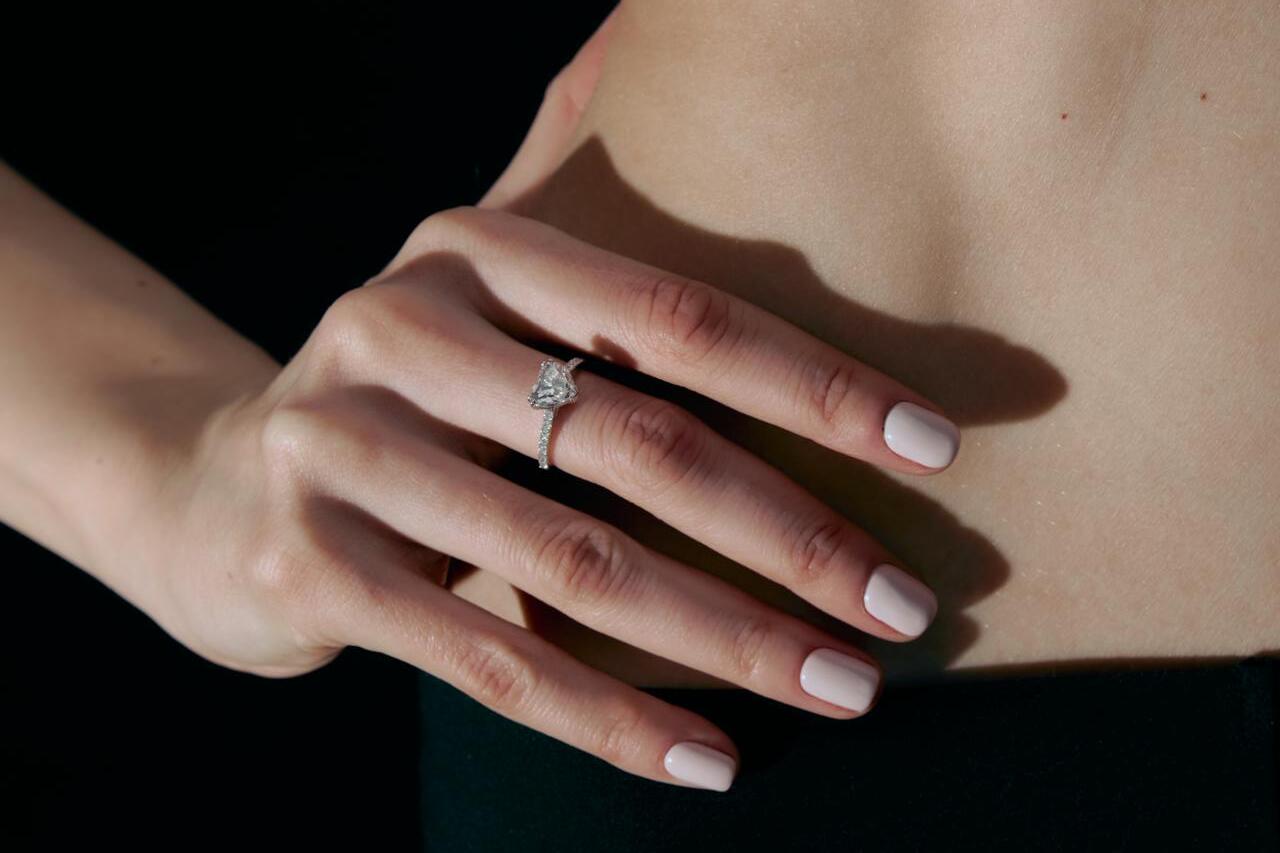
Lab-grown diamonds have long moved beyond the experimental stage and become part of the modern jewelry industry. They are increasingly used in jewelry, including engagement rings, where they serve as a full-fledged alternative to natural diamonds.
Consumers are also increasingly willing to choose lab-grown diamonds for engagement rings. According to BriteCo, in 2024, lab-grown diamonds accounted for more than 45% of center-stone purchases for engagement rings in the company’s U.S. sample.
Engagement rings featuring lab-grown diamonds are therefore no longer a compromise or a “second choice.” For many couples, they are a conscious decision: a genuine diamond with the desired characteristics and the opportunity to choose an origin that aligns with their values.
If design, diamond origin, and its characteristics matter to you, you can explore the selection of jewelry with lab-grown diamonds from SOLO for Diamonds. If you would like to see the stones in person and compare different shapes, sizes, and colors, you can also book a consultation at the SOLO for Diamonds boutique in Kyiv or Lviv.
Myth 7. All lab-grown diamonds are the same in color and shape
The fact that a diamond is lab-grown says nothing about what the finished stone will look like. It is a distinct category that includes diamonds with a wide range of characteristics.
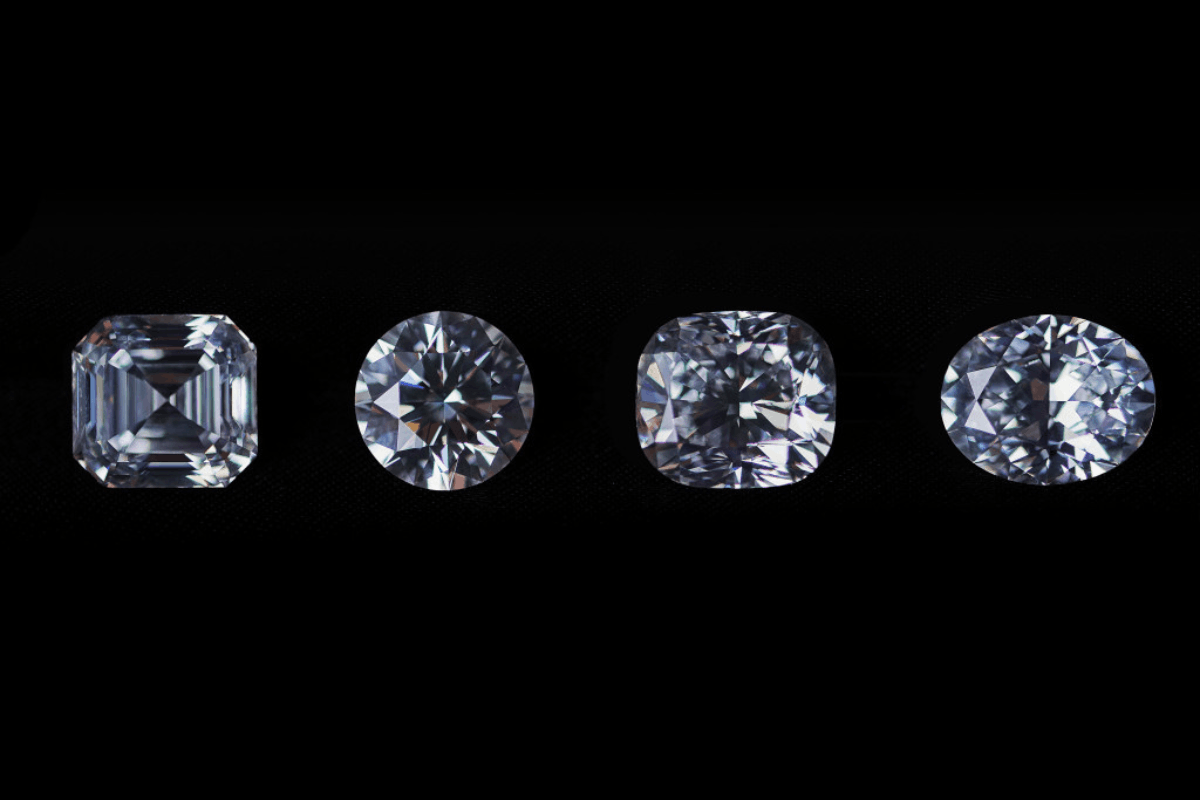
Just like natural diamonds, lab-grown diamonds differ in size, clarity, color, cut, and proportions. The result is influenced by the growing technology, crystal characteristics, production conditions, and subsequent processing. GIA notes that lab-grown diamonds can be produced using HPHT or CVD methods, while the quality and preparation of the crystal seed also influence the final result.
They are not limited to classic colorless stones either. Modern technologies make it possible to produce fancy colors, including yellow, pink, and blue. In nature, these colors can be exceptionally rare, while controlled production makes a wider range of shades possible.
SOLO for Diamonds offers colorless, yellow, pink, and blue lab-grown diamonds, as well as stones in different shapes and sizes — from small accent stones to diamonds of more than 3 carats.
There is also a highly personalized option — a DNA diamond. SOLO for Diamonds offers the creation of a personal diamond from a person’s biomaterial, making the jewelry especially personal and symbolic. In this case, the question is no longer whether lab-grown diamonds are “the same,” but whether it is possible to create a story that belongs uniquely to one person.
[products]
How SOLO for Diamonds approaches quality and transparency
For SOLO for Diamonds, the lab-grown origin of a diamond is not a hidden detail but an integral part of the brand’s philosophy.
SOLO for Diamonds uses jewelry-quality lab-grown diamonds whose characteristics are verified by independent international gemological laboratories, including GIA and IGI. This gives customers documented confirmation of the stone’s key characteristics.
Lab-grown diamonds are created using two main modern technologies — HPHT and CVD. They differ in the conditions and principles used to grow the crystal, but both methods can produce genuine, jewelry-quality diamonds. Learn more about these technologies in the article “HPHT and CVD: How diamonds are grown.”
For buyers, this means one simple thing: it is important not only to know that a stone is lab-grown, but also to understand what to look for when choosing one — its characteristics, documentation, and origin. SOLO for Diamonds’ quality guarantee is based on quality control and independent laboratory verification of the stones’ characteristics.
Lab-grown diamonds: progress, not imitation
All seven myths are based on the mistaken assumption that a diamond grown in a laboratory cannot be a real diamond.
But a diamond is defined not by where it formed, but by its chemical composition and crystal structure. A natural diamond forms deep within the Earth, while a lab-grown diamond is created in a controlled technological environment.
Now that you know more about SOLO for Diamonds’ lab-grown diamonds than just the common stereotypes, you can make your choice based on what really matters: the diamond’s characteristics, cut quality, design, certification, and the personal meaning of the jewelry.
FAQ
Can a lab-grown diamond be insured or certified?
Is a synthetic diamond the same as a lab-grown diamond?
How much do lab-grown diamonds cost?
How can you tell a lab-grown diamond from a natural diamond?





you may also be interested in
22.07.26
Diamond engagement ring. A tradition that became a symbol of loveA marriage proposal is one of the most important moments in the lives of two people. Today, it is almost impossible to imagine it without a piece of jewelry that has become a universal symbol of commitment, trust, and the desire to build a future together.
read05.08.26
What are lab-grown diamonds: a complete guide in simple wordsLab-grown diamonds are real gemstones that differ from natural diamonds only by their origin. Discover everything you need to know about HPHT and CVD technologies, certification, differences from natural diamonds, and key factors to consider when choosing a diamond.
read05.08.26
HPHT vs. CVD: how are diamonds really grown in a laboratory?Discover how modern technology transforms carbon into a real diamond, the stages each crystal goes through, and the key differences between the HPHT and CVD growing methods.
read15.08.26
Lab-grown or natural diamond: a complete comparison guideNatural or lab-grown diamond — what is actually different, and what remains the same? We compare their origin, characteristics, certification, and key features to help you make an informed choice.
read whatsapp
 Telegram
 EMail
EMail