 Engagement ring with one diamond
 Engagement ring with scattered diamonds
 Wedding ring for her
 Wedding ring for him


 About the brand
 How diamonds grow
 Blog
Blog
 Solo community
 Media
Media
 About diamonds in simple words

 Ukraine
 Europe
 United States
HPHT vs. CVD: how are diamonds really grown in a laboratory?
Discover how modern technology transforms carbon into a real diamond, the stages each crystal goes through, and the key differences between the HPHT and CVD growing methods.
05.08.2026
from Julia Kusher
6 min read
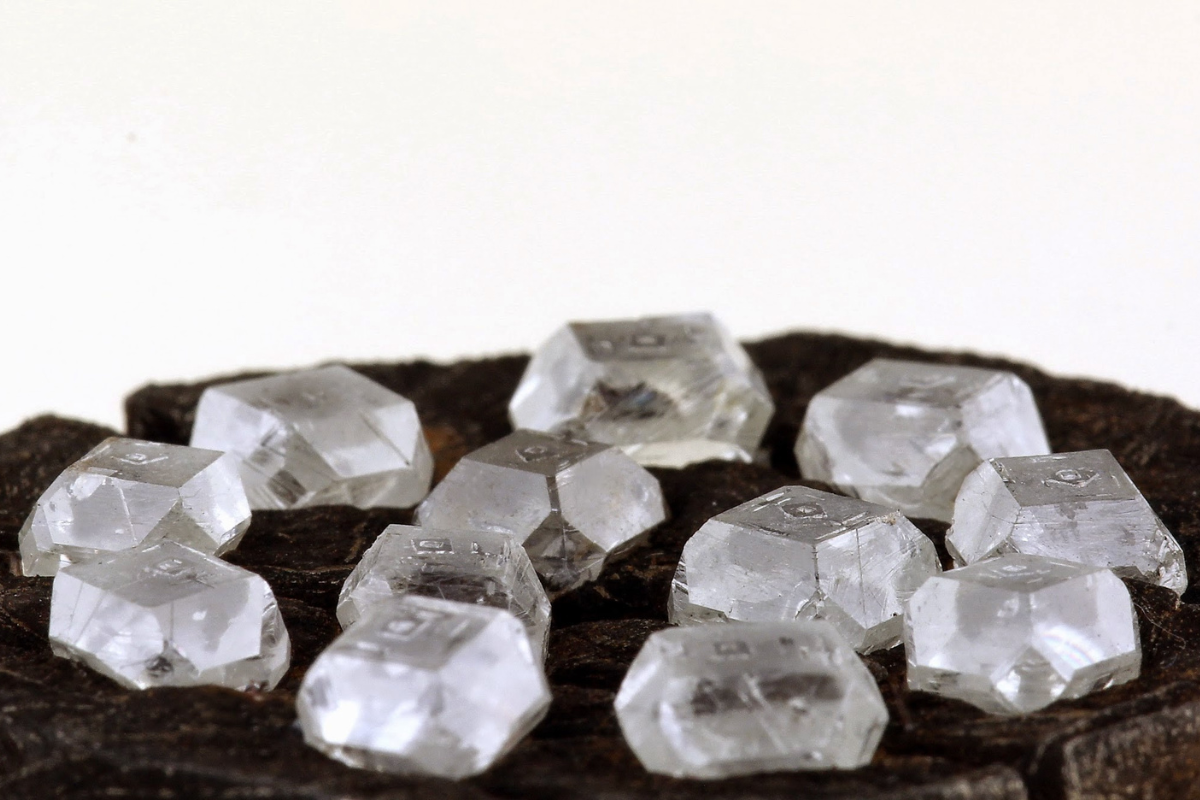
Just a few years ago, the idea that a diamond could be grown in a laboratory seemed almost impossible. Today, these stones are used by leading jewelry brands around the world, while the technologies behind their creation continue to evolve. However, many people still imagine this process as a quick chemical reaction or an artificial imitation of a precious gemstone.
In reality, the process is far more complex. Lab-grown diamonds are real carbon crystals created in a laboratory using advanced technologies — not imitations or “fake” stones. Their growth is a highly precise technological process that takes several weeks and requires careful control at every stage. A laboratory does not create a copy of a natural diamond; instead, it recreates the conditions under which a carbon crystal forms in the Earth’s depths.
In this article, we explain how diamonds are grown, how the two main technologies differ, what the process looks like in modern production, and why both methods allow the creation of genuine gem-quality diamonds.
How diamonds are actually grown: two methods
Today, there are two main methods used for growing diamonds on an industrial scale. The first is HPHT, which recreates the natural conditions under which diamonds form deep beneath the Earth’s surface. The second is CVD, where a diamond gradually grows layer by layer from a carbon-containing gas.
Both technologies lead to the same result — the formation of a diamond with the same physical, chemical, and optical properties as a natural diamond. They also create the same crystal lattice at the atomic level. The only difference lies in the way the crystal grows.
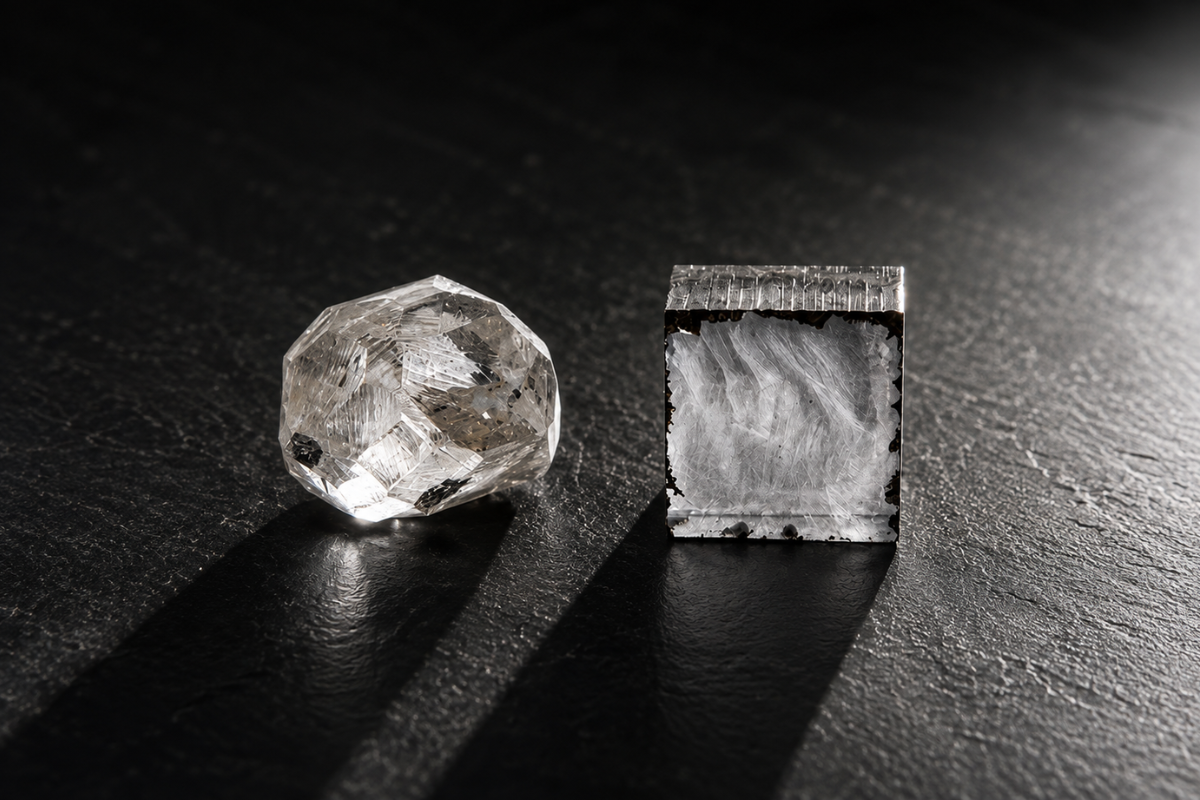
HPHT: a technology that recreates the natural formation of diamonds
The name HPHT stands for High Pressure High Temperature. These are the same conditions that exist deep within the Earth’s mantle, where natural diamonds formed millions of years ago. Modern engineers have learned how to recreate this process in specialized presses, significantly reducing the time required for crystal growth.
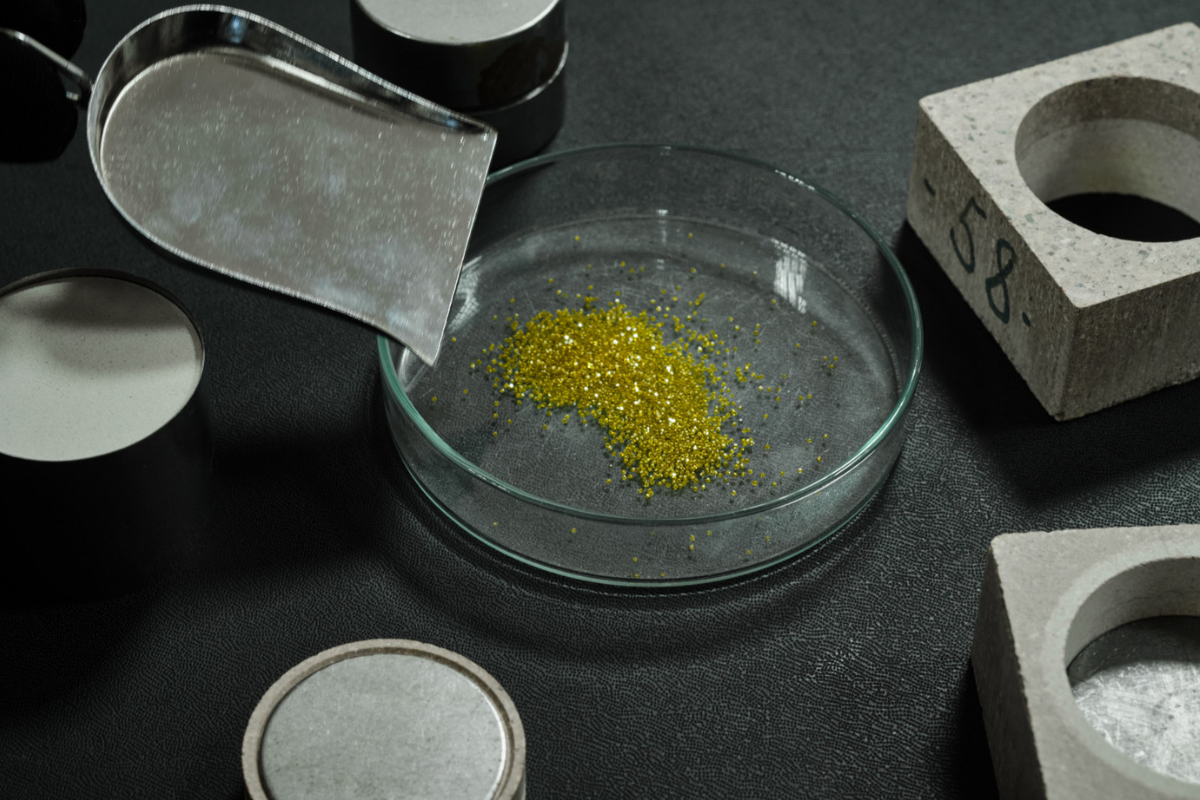
During HPHT diamond growth, a diamond seed is used — a small crystal that serves as the foundation for the future gemstone. It is placed inside a sealed chamber together with a source of pure carbon.
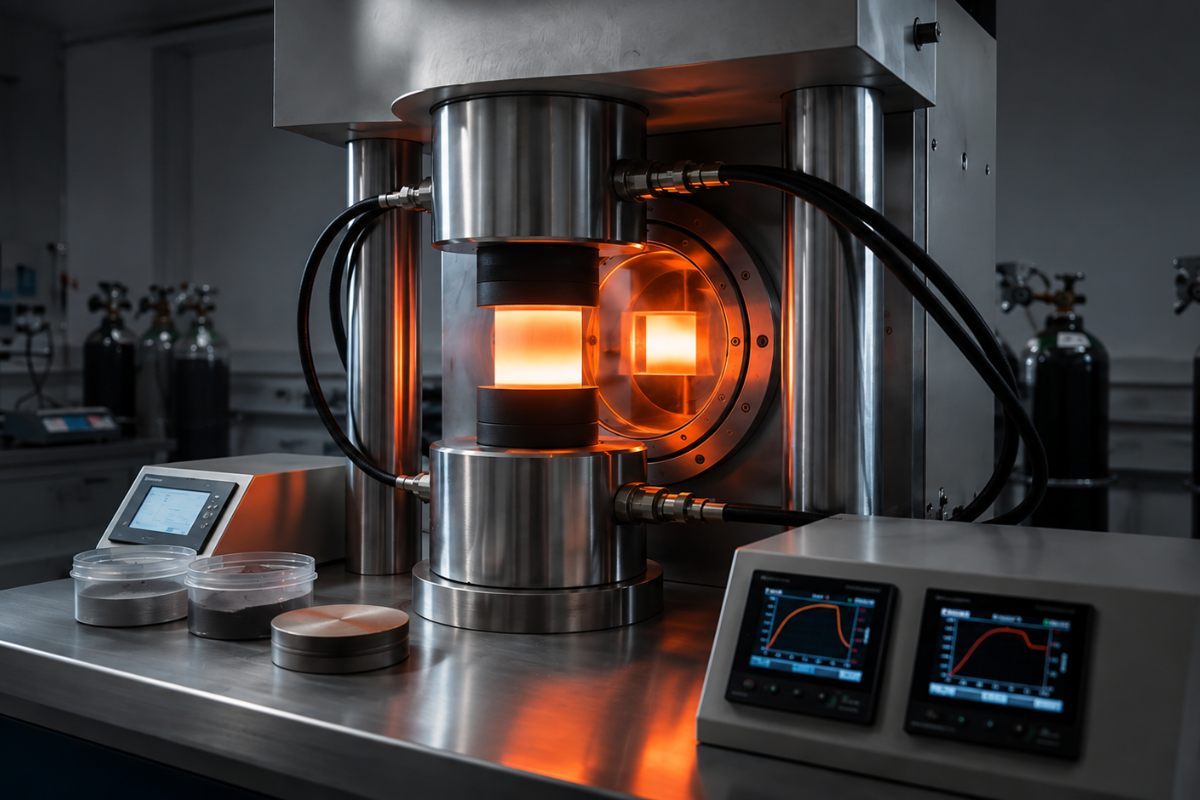
The equipment then creates extreme conditions:
- pressure of around 60,000 atmospheres;
- temperatures above 1,400–1,600 °C;
- a special metal catalyst environment that helps carbon atoms gradually attach to the crystal.
Under these conditions, carbon atoms begin to bond with the surface of the crystal, replicating the natural growth process. After several weeks, a complete diamond crystal is formed, which becomes a polished gemstone after cutting.
Due to the high stability of the HPHT process, diamonds grown using this method often demonstrate excellent color characteristics. According to industry sources, including Vogue UA, this technology makes it possible to consistently produce diamonds in high color categories such as D, E, and F. In addition, HPHT technology allows the creation of colored diamonds in a variety of natural shades.
How the HPHT process works:
- A high-quality diamond seed is selected.
- The seed is placed into a special chamber together with a carbon source.
- Pressure of around 60,000 atmospheres is created.
- The temperature is increased to above 1,400 °C.
- Carbon atoms gradually build the crystal structure.
- After several weeks, a complete diamond crystal is formed.
- The stone undergoes cutting and polishing.
CVD: a modern method of growing crystals layer by layer
The second widely used method of diamond growth is CVD (Chemical Vapor Deposition). Unlike HPHT, this technology does not recreate the extreme conditions found deep inside the Earth. Instead, the crystal gradually grows from carbon atoms that are deposited from a gas environment under high temperatures.
The process also begins with a thin diamond plate known as a diamond seed. It is placed inside a sealed chamber filled with a special gas mixture containing carbon. Once the process is activated, carbon atoms begin to settle on the surface of the seed, forming new layers of the crystal lattice.
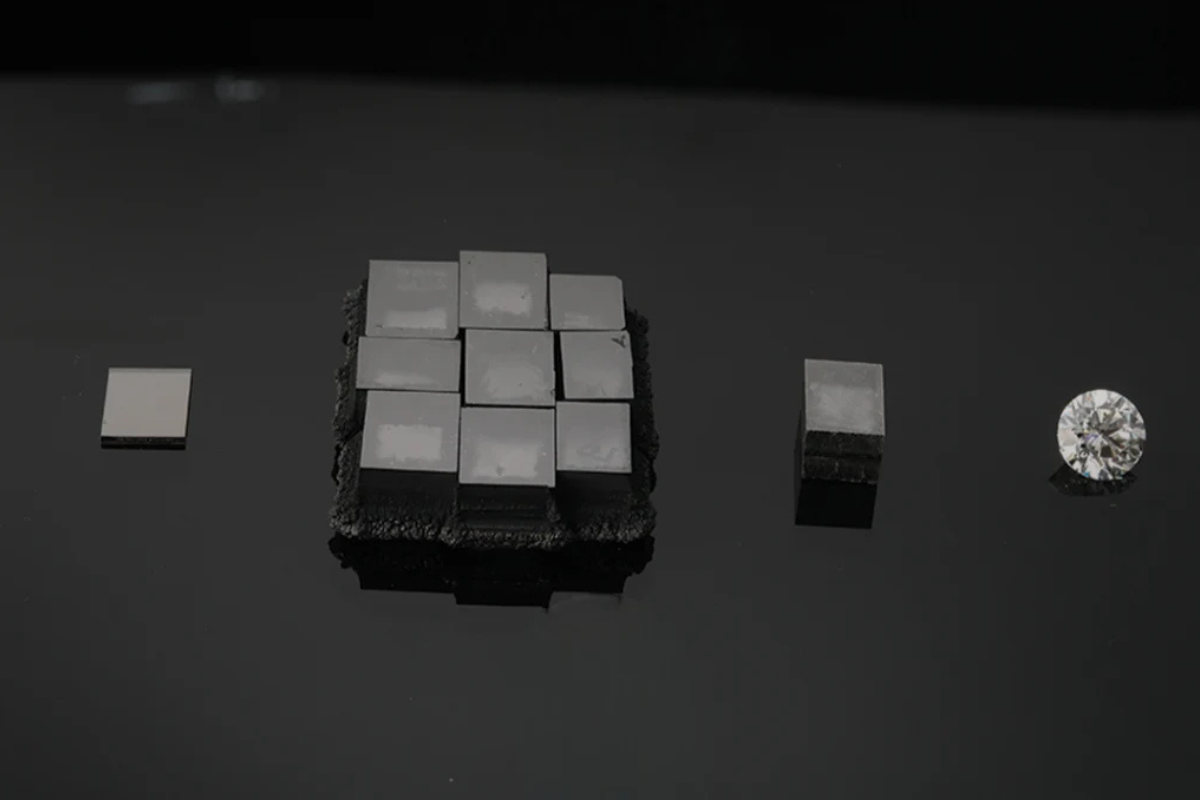
Essentially, the diamond grows gradually — layer by layer — until it reaches the required size. As with HPHT, the process takes weeks rather than hours, because the growth rate must remain precisely controlled to preserve the high quality of the crystal.
This is why CVD diamonds also have the same physical and chemical properties as natural diamonds. After the growth process is complete, diamonds may undergo additional treatment to enhance their color and optical characteristics.
How CVD technology works:
- A thin diamond plate is prepared as a seed.
- The seed is placed inside a vacuum chamber.
- The chamber is filled with a carbon-containing gas.
- The gas is activated using high energy.
- Carbon atoms deposit onto the surface of the seed.
- The crystal gradually grows layer by layer.
- After several weeks, a finished diamond crystal is formed.
HPHT or CVD: how diamond growth methods differ
Both technologies — HPHT and CVD — create genuine diamonds, but the path to crystal formation is different in each case. When comparing the results of these methods, grown diamonds may differ in size, color, and potential applications. The choice of technology depends on the desired characteristics of the stone: its size, color, purpose, and the requirements of the future jewelry piece.
Size and color characteristics
The HPHT method is the closest to the natural process of diamond formation. Thanks to stable growth conditions, this technology allows the creation of diamonds with excellent color characteristics, including D, E, and F color grades. It is also commonly used to create colored diamonds — from vivid yellow stones to rare fancy color varieties.
HPHT diamonds can be produced in different sizes depending on manufacturing parameters. The technology is well suited for creating gem-quality stones used in rings, earrings, and other jewelry pieces.
CVD technology makes it possible to grow highly pure crystals with controlled structures. This method is most often used to produce high-quality colorless diamonds. In some cases, diamonds may have a slight grayish or brownish tint after growth, but this can be adjusted through additional treatment.
Main differences:
- HPHT — stable color characteristics, the ability to create both colorless and colored diamonds, and a wide range of growth parameters.
- CVD — precise layer-by-layer crystal formation technology, often used to produce large, high-purity diamonds.
Both methods make it possible to create diamonds that meet jewelry-quality standards.
Growth time and applications
Both HPHT and CVD require time to form a crystal. It is not an instant process: carbon atoms must gradually arrange themselves into a precise crystal structure.
On average, diamond growth takes from several weeks to several months, depending on the size of the future stone, the chosen technology, desired characteristics, and the complexity of the process.
The HPHT method is often used when stable color characteristics and a structure close to natural diamond formation are required. This is why it is widely applied in the creation of gemstones used in the premium jewelry segment.
The CVD method is more commonly chosen for growing crystals with high purity and controlled characteristics. Their properties can be precisely adjusted depending on the intended application. The technology is used not only in jewelry but also in industries where extremely durable materials are required.
Comparison of two technologies
|
Characteristic |
HPHT | CVD |
|---|---|---|
| Principle | Recreates conditions found deep inside the Earth | Crystal growth from a gas environment |
| Main factor | High pressure and high temperature | Controlled deposition of carbon atoms |
| Process foundation | Diamond seed + carbon source | Thin diamond seed plate + carbon-containing gas |
| Growth time | Several weeks | Several weeks |
| Features | Stable color characteristics, possibility of creating colored diamonds | Precise control over crystal structure |
| Applications | Premium jewelry, colorless and colored gemstones | Colorless diamonds, technological applications |
How diamonds are grown at the Alkor-D factory
One example of modern laboratory-grown diamond production is the Alkor-D factory in Kyiv, Ukraine — the largest enterprise in Europe specializing in HPHT diamond growth.
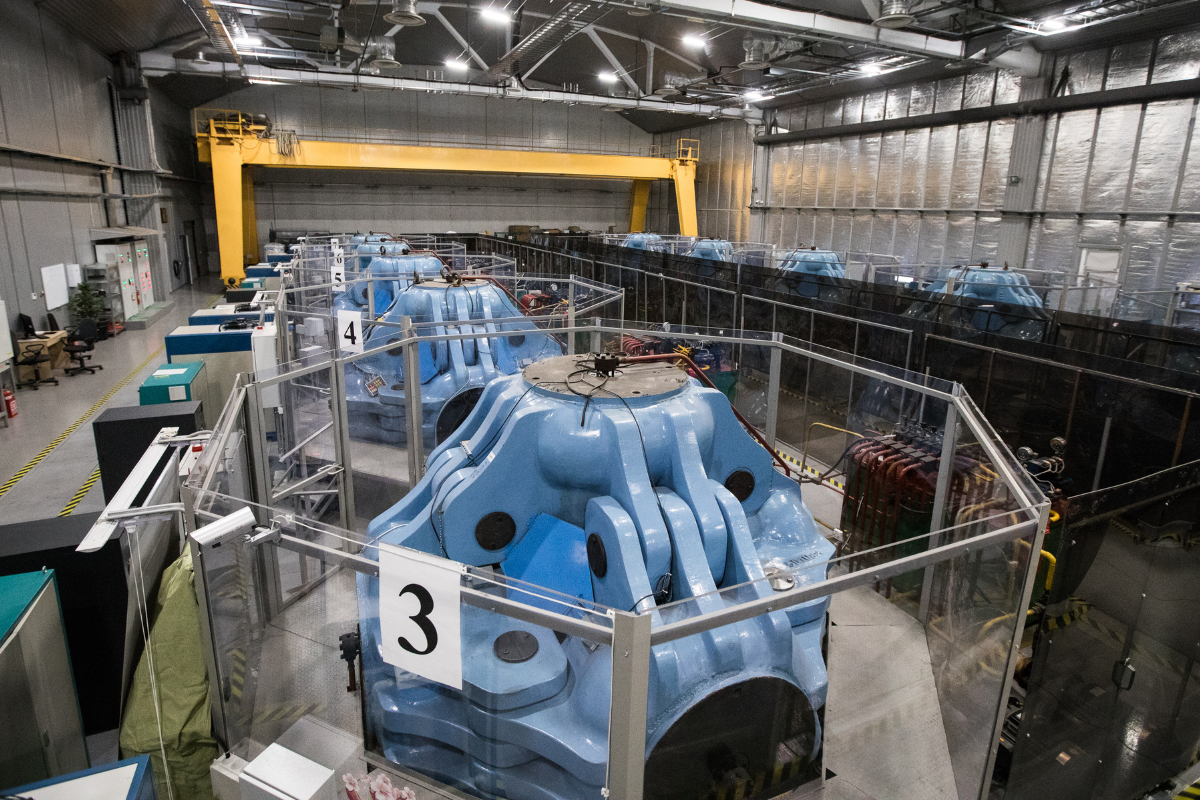
Production at facilities like this resembles a high-precision scientific laboratory, where every stage is carefully monitored using advanced equipment. The foundation of the process is the creation of conditions that closely replicate natural diamond formation: precise control of temperature, pressure, and the environment in which the crystal develops.
The process uses specialized HPHT systems, where a small diamond seed gradually transforms into a complete diamond crystal. After growth is complete, the stones undergo sorting, cutting, and quality control.
It is important to understand that a laboratory-grown diamond is not an “imitation” or a substitute for a natural stone. It is a genuine diamond with the same crystal structure, chemical composition, and physical properties.
For SOLO for Diamonds, diamond growth technology has become the foundation for creating contemporary jewelry that combines innovation, responsible resource use, and traditional craftsmanship. This is why the brand’s collections feature rings with lab-grown diamonds and earrings with lab-grown diamonds, created with high-quality stones.
From diamond growth technology to a finished jewelry piece
To learn more about how diamonds are created and to choose a jewelry piece, you can receive a personal consultation at the SOLO for Diamonds boutique. Our experts will help you discover more about SOLO for Diamonds diamonds, their origin, certification, and the characteristics of each stone.
How long does a lab-grown diamond take to grow?
A lab-grown diamond usually forms over a period of several weeks. The exact time depends on the growth method, the size of the crystal, its future shape, and the characteristics required.
Smaller crystals can be grown faster, while larger stones with more complex structures require additional time and precise control of growth parameters. The process is also influenced by production conditions, temperature regulation, and the stability of the growth environment.
After the growth process is complete, the diamond undergoes additional preparation stages: cutting, polishing, and evaluation of its characteristics. Only after these processes does it become a finished gemstone ready for use in jewelry.
Does the growth method affect diamond quality?
No. The growth method itself does not determine whether a diamond will be higher or lower quality. Both HPHT and CVD technologies create genuine diamonds with the same chemical composition, crystal structure, hardness, and ability to reflect light.
Diamonds grown in laboratories are real precious gemstones created using technologies that recreate the natural formation process — they are not imitations or artificial substitutes.
The main difference between these technologies is not the quality of the finished stone, but the way the crystal is formed. One diamond grows under high pressure and temperature, while another develops through the gradual deposition of carbon atoms inside a specialized chamber.
Like natural diamonds, lab-grown diamonds are evaluated according to the internationally recognized 4C system:
- Carat — the weight of the stone;
- Color — the diamond’s hue;
- Clarity — the presence of internal characteristics and inclusions;
- Cut — the quality of the diamond’s proportions and craftsmanship.
To confirm a diamond’s characteristics, independent expert evaluation and certification are performed. Leading gemological laboratories, including GIA and IGI, assess stone parameters regardless of whether a diamond was formed naturally or grown in a laboratory.
That is why, when choosing jewelry, it is important to consider not only the diamond’s growth method but also its characteristics, cutting quality, and verified origin.
Lab-grown diamonds — science, not magic
The answer to the question “how are diamonds grown?” is now clear: it is not a quick process of creating an artificial copy, but a complex technology that requires precision, expertise, and control at every stage.
Lab-grown diamonds are created through advanced scientific methods. With HPHT technology, specialists recreate conditions similar to those in which natural diamonds form deep beneath the Earth’s surface. With CVD technology, the crystal develops gradually — atom by atom, layer by layer.
Both methods represent different technological paths toward the same result: a diamond with exceptional brilliance, durability, and the unique properties that have made this gemstone a symbol of beauty and longevity for centuries.
Modern technologies make it possible to create high-quality stones with controlled characteristics, while jewelry featuring lab-grown diamonds is becoming part of a new generation of design — from timeless classics to innovative artistic creations.

For SOLO for Diamonds, a lab-grown diamond represents a combination of advanced technology and the traditions of jewelry craftsmanship. In the brand’s collections, each stone becomes part of a story where innovation helps create symbols of meaningful moments.





you may also be interested in
22.07.26
Diamond engagement ring. A tradition that became a symbol of loveA marriage proposal is one of the most important moments in the lives of two people. Today, it is almost impossible to imagine it without a piece of jewelry that has become a universal symbol of commitment, trust, and the desire to build a future together.
read05.08.26
What are lab-grown diamonds: a complete guide in simple wordsLab-grown diamonds are real gemstones that differ from natural diamonds only by their origin. Discover everything you need to know about HPHT and CVD technologies, certification, differences from natural diamonds, and key factors to consider when choosing a diamond.
read whatsapp
 Telegram
 EMail
EMail