 Engagement ring with one diamond
 Engagement ring with scattered diamonds
 Wedding ring for her
 Wedding ring for him


 About the brand
 How diamonds grow
 Blog
Blog
 Solo community
 Media
Media
 About diamonds in simple words

 Ukraine
 Europe
 United States
Lab-grown diamonds: answers to 20 frequently asked questions
Find answers to 20 frequently asked questions about lab-grown diamonds: their properties, differences from natural diamonds, certification, price, jewelry, and care.
03.09.2026
from Julia Kusher
7 min read
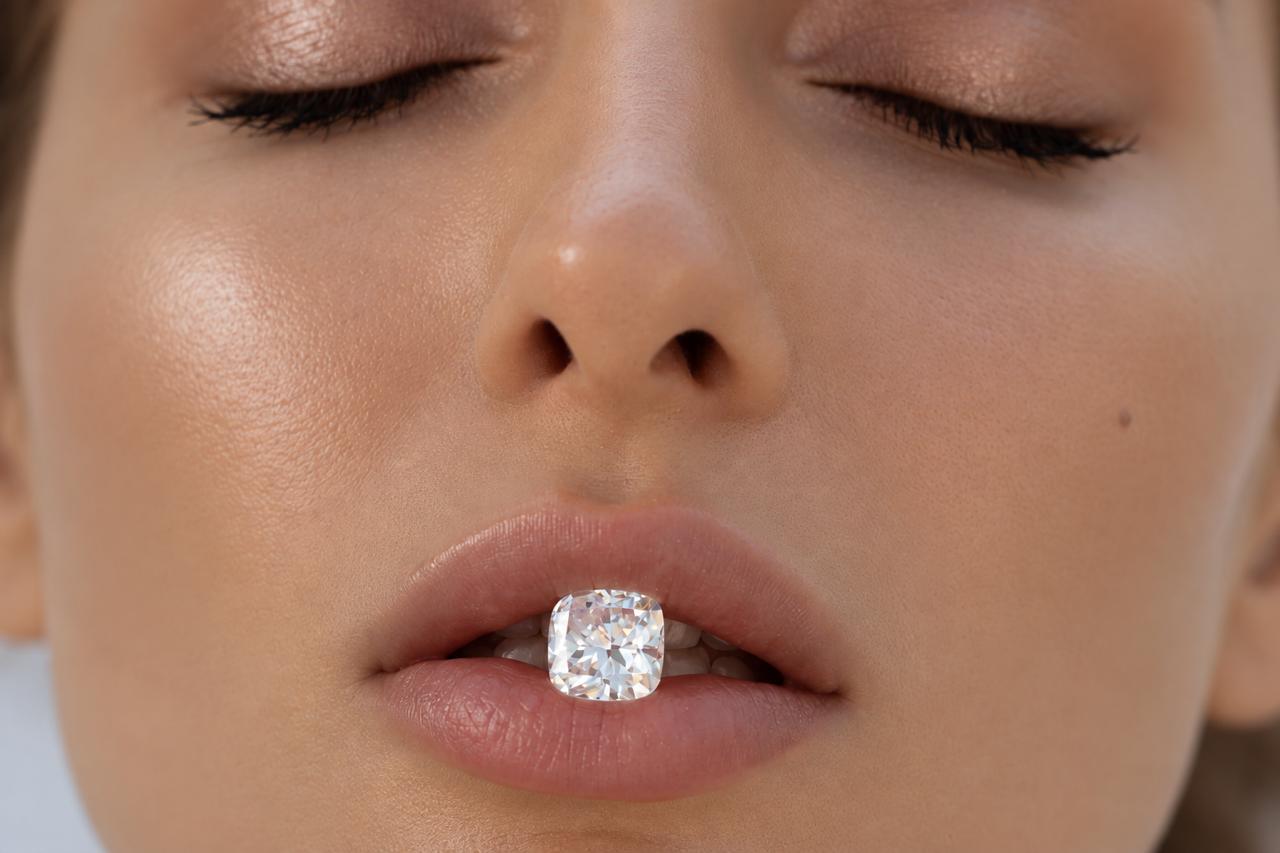
There are still many questions surrounding lab-grown diamonds. Are they real? How do they differ from natural diamonds? Can you tell them apart with the naked eye? Why do they cost less, and do they come with certificates?
The short answer: a lab-grown diamond is a real diamond created in controlled conditions using HPHT or CVD technology. It has the same chemical composition, crystal structure, hardness, and optical properties as a stone formed deep within the Earth. The only difference is its origin.
Below, we answer 20 of the most frequently asked questions about lab-grown diamonds — from basic terminology and growing technologies to certification, pricing, jewelry, and care.
Basics and Terminology
1. What Is a Lab-Grown Diamond?
A lab-grown diamond is a genuine gemstone made of pure carbon arranged in a characteristic crystal lattice. In terms of its chemical and physical properties, it corresponds to a natural diamond, but unlike a stone that forms deep within the Earth over millions of years, it is created in a controlled environment in just a few weeks.
Modern technologies recreate the conditions under which carbon atoms gradually form a crystal. The result is not an imitation or substitute, but a diamond with the same material nature.
This is why origin does not determine whether a stone is “real.” What defines it are its composition, structure, and properties. Learn more in our guide to what lab-grown diamonds are.
2. What Is the Difference Between a Diamond and a Brilliant?
These terms are often used interchangeably, although there is a certain terminological distinction in everyday language.
A diamond is a precious gemstone that acquires its characteristic play of light after professional cutting and polishing. The term “brilliant” traditionally refers specifically to a stone cut in the brilliant style, although in modern jewelry and gemological terminology, the word “diamond” is more commonly used. In jewelry practice, the name refers to the cut rather than the origin of the stone.
Importantly, this terminology does not depend on origin. Both natural and lab-grown stones remain diamonds after cutting.
3. What Are Lab-Grown Diamonds Also Called?
Several names can be found in different sources: lab-grown diamond, laboratory-grown diamond, synthetic diamond, or eco-diamond.
The term “artificial diamond” is also sometimes used, but it can be misleading. In everyday language, “artificial” often implies an imitation, whereas a lab-grown stone is not an imitation.
The most accurate terms are lab-grown or laboratory-grown diamond. They immediately explain the key distinction: the difference lies in the stone’s origin, not its properties.
4. Where Can You Buy Lab-Grown Diamonds in Ukraine?
When choosing a lab-grown diamond, it is worth paying attention not only to the jewelry itself but also to the transparency of the stone’s origin. A reliable seller should provide information about the diamond’s characteristics, certification, and specific origin.
A good indicator is a brand or manufacturer that operates its own production and can trace the stone’s journey from growth to the finished piece of jewelry. It is also worth considering the seller’s experience and reputation in the market.
SOLO for Diamonds offers jewelry featuring lab-grown diamonds. The brand provides information about the stones’ characteristics and the materials used in each piece, helping customers make informed choices and understand what their jewelry is made of.
Comparison with Natural Diamonds and Value
5. What Is the Difference Between Natural and Lab-Grown Diamonds?
The main difference is their origin.
A natural diamond forms under natural geological conditions deep within the Earth. A lab-grown diamond is created by humans using technologies that recreate the necessary conditions for crystal growth, simulating the high pressure and temperature involved in natural diamond formation.
At the same time, their chemical composition is the same: both are based on carbon. They have comparable crystal structures, hardness, and optical properties.
This is why their origin cannot be determined with the naked eye. Gemologists use specialized equipment and diagnostic methods for this purpose.
A detailed comparison of their origin, properties, and value shows that choosing between the two is not a question of “real or fake,” but rather a matter of personal priorities.
6. How Much Does a Lab-Grown Diamond Cost Compared with a Natural Diamond?
The price depends on many factors, including carat weight, color, clarity, cut quality, and shape.
In general, a lab-grown diamond typically costs less than a natural diamond with similar characteristics. The difference can be significant, especially for larger stones.
This allows buyers to allocate their budget differently — for example, to choose a larger carat weight, prioritize certain characteristics, or opt for a more intricate jewelry design.
At the same time, a lower price does not mean lower physical quality. The price is determined not only by the properties of the material itself but also by market conditions, origin, and supply.
7. How Much Do Rings with Lab-Grown Diamonds Cost?
The price of a finished piece of jewelry depends on more than just the stone itself. It is influenced by the diamond’s weight and characteristics, its shape, the metal, the number of additional stones, and the complexity of the design.
A small minimalist ring may cost significantly less than a model with a large center stone or an intricate setting. Therefore, it is more accurate to consider the entire composition of the jewelry rather than the diamond’s size alone.
8. Can You Resell a Ring with a Lab-Grown Diamond, and for How Much?
This is a question worth considering honestly before making a purchase. Jewelry — regardless of the origin of its stone — is not necessarily an investment asset.
On the secondary market, lab-grown diamonds generally experience a greater loss in value than rare natural diamonds. This is due to demand patterns and the ongoing ability to produce new stones.
Therefore, jewelry with a lab-grown diamond is best viewed primarily as something to wear, a symbol of an important occasion, or part of a personal collection rather than as a financial investment.
[products]
Certification and Authenticity
9. What Is a GIA Diamond Certificate?
GIA is one of the world’s best-known independent gemological organizations. Its report provides a professional assessment of the characteristics of a specific stone.
A GIA certificate helps confirm the diamond’s key characteristics and origin. The assessment is based on the internationally recognized 4Cs system:
-
Carat — weight;
-
Color — color;
-
Clarity — clarity;
-
Cut — cut quality.
For lab-grown diamonds, a corresponding report format is used that identifies their origin.
Certification is important because it makes it possible to evaluate the characteristics of a specific stone rather than an abstract category. For example, two diamonds of the same carat weight can differ significantly in color, clarity, and cut quality.
10. What Is the Difference Between GIA and IGI Certificates?
Both GIA and IGI are internationally recognized gemological laboratories that examine gemstones. Both organizations issue reports for lab-grown diamonds.
An IGI certificate also contains information about the stone’s key characteristics and laboratory-grown origin.
|
Characteristic |
GIA | IGI |
|---|---|---|
|
Type of organization |
Independent gemological laboratory | Independent gemological laboratory |
|
Evaluation of characteristics |
Yes | Yes |
|
4Cs grading |
Yes | Yes |
|
Reports for lab-grown diamonds |
Yes | Yes |
|
Report identification number |
Yes | Yes |
|
Data verification |
Yes | Yes |
When choosing, it is more important not to look for a supposedly “better” certificate, but to make sure that the document belongs to the specific stone and contains a complete description of its characteristics.
11. How Can You Tell a Diamond from an Imitation Such as Cubic Zirconia or Glass?
Not every transparent, sparkling stone is a diamond — the idea that all such stones are the same is a myth.
-
Cubic zirconia is a synthetic material based on zirconium dioxide. It can imitate the appearance of a diamond, but it has a different chemical composition and physical properties.
-
Moissanite is also a separate material. It has distinctive brilliance and high hardness, but it is not a diamond.
-
Glass is an even simpler imitation that differs significantly in its physical characteristics.
This is where an important distinction should be understood: a lab-grown stone does not belong to the category of substitutes. It is a diamond, whereas moissanite and cubic zirconia are different materials.
12. How Can You Check the Authenticity of a Lab-Grown Diamond at Home?
Home tests can provide a rough indication of whether a stone is a diamond or certain imitations. They cannot reliably determine its origin.
For example, even if a test confirms the thermal conductivity characteristic of a diamond, it will not tell you whether the stone formed naturally or was grown in a laboratory.
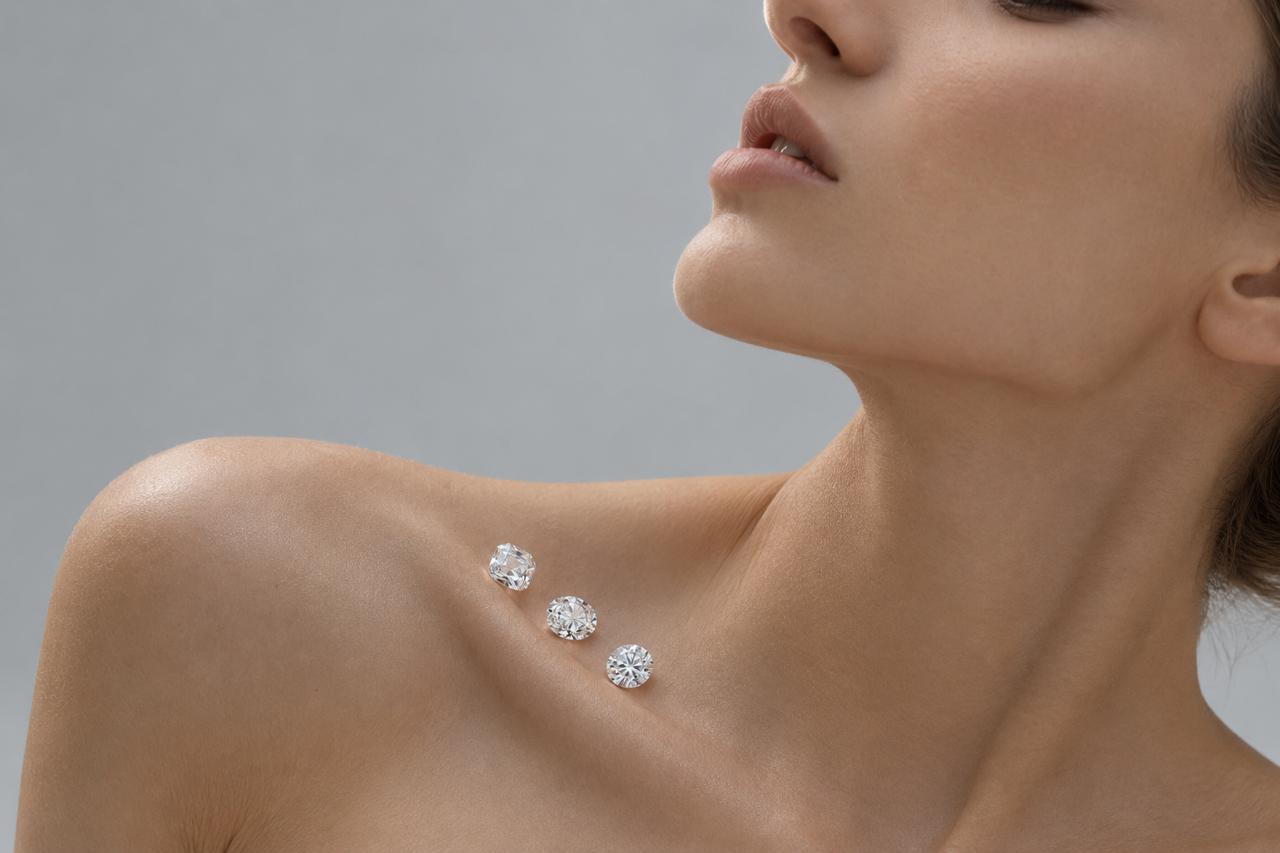
The most reliable method of verification is an independent certificate, report number, and identification of the specific stone. In some cases, the report number is laser-inscribed on the girdle.
This number can be checked against the certificate data. Professional gemological equipment is used to determine the stone’s origin accurately.
13. Is a Certificate Required When Buying a Lab-Grown Diamond?
For a significant center stone, certification is an important part of the purchase.
The document confirms the stated characteristics and helps identify the specific stone. This is particularly important when comparing several options with similar specifications.
A certificate also helps you understand exactly what you are paying for: not simply a “large diamond,” but a stone with a specific carat weight, color, clarity, and cut characteristics.
Jewelry with Lab-Grown Diamonds
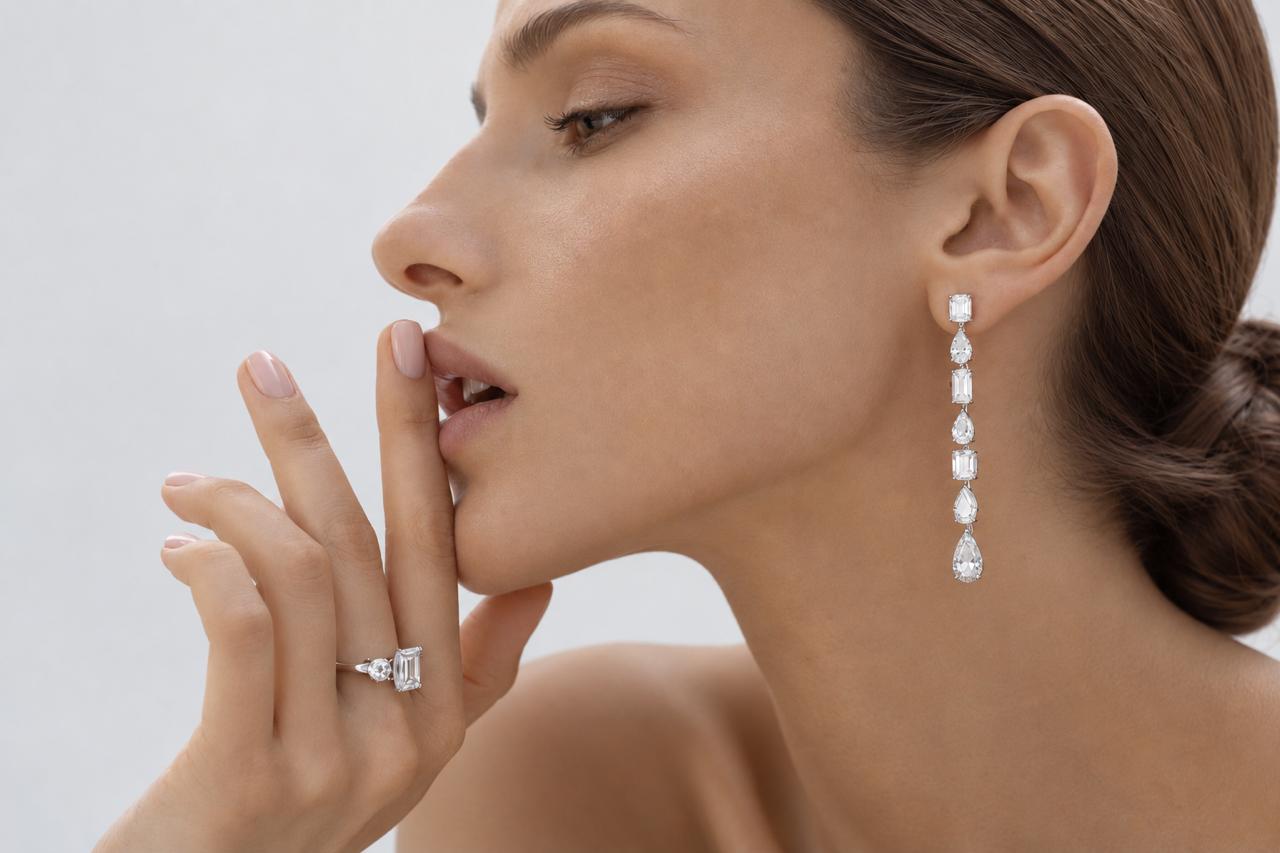
14. Is a Lab-Grown Diamond Suitable for Earrings?
Yes. Thanks to its physical properties, a lab-grown diamond can be used in any type of jewelry.
For earrings, brilliance, durability for everyday wear, and the ability to select a pair of stones with harmonious characteristics are particularly important.
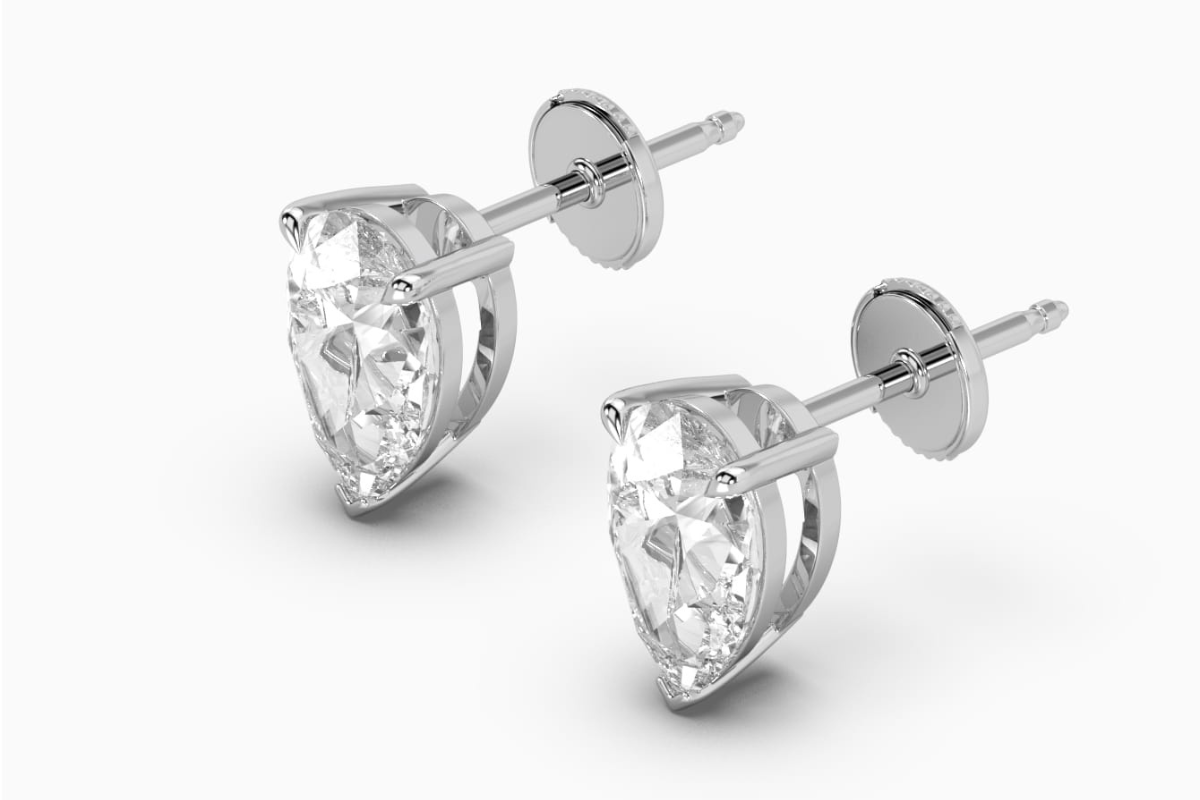
Classic solitaire stud earrings remain a versatile option, while more elaborate designs can combine diamonds of different shapes and sizes.
All designs are available in the lab-grown diamond earrings category.
15. What Jewelry with Lab-Grown Diamonds Is Most Popular — Rings, Earrings, or Necklaces?
Lab-grown diamonds are most often chosen for engagement rings. But they are not limited to them: their lower cost compared with natural diamonds makes it possible to consider a larger center stone without proportionally increasing the budget.
Next in popularity are diamond stud earrings and minimalist necklaces with a single stone. These pieces are easy to incorporate into an everyday wardrobe, and their designs are not dependent on short-term trends.
More options are available in the lab-grown diamond rings category.
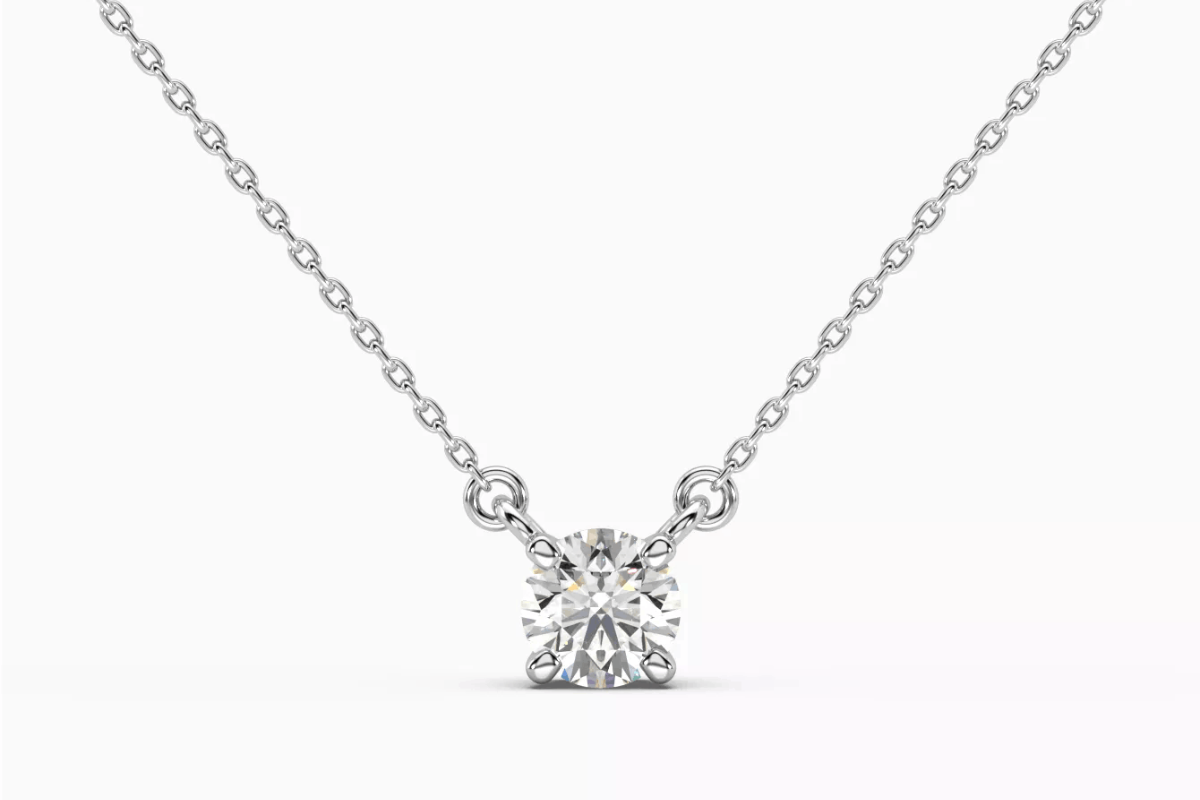
16. Is a Lab-Grown Diamond Suitable for Necklaces and Pendants?
Yes, especially for jewelry in which a single stone serves as the main focal point. Lab-grown diamonds work particularly well in these designs because they offer greater flexibility in choosing the stone’s size.
A small diamond in a minimalist setting can look very delicate, while a larger stone creates a more striking accent around the neckline.
Because the cost of a lab-grown stone allows for greater flexibility in size, it opens up more possibilities for design.
Explore all models in the lab-grown diamond necklaces category.
Properties and Care
17. Does a Lab-Grown Diamond Glow Under UV Light?
Some stones may exhibit fluorescence under ultraviolet light. The intensity and color of this fluorescence can vary depending on the individual stone and the characteristics of its structure.
For gemologists, a stone’s reaction to ultraviolet light can be one of several additional diagnostic indicators. However, for a buyer, it is not a standalone method for determining the stone’s origin.
The presence or absence of fluorescence under a UV lamp alone does not indicate whether a diamond is natural or lab-grown.
18. Is a Lab-Grown Diamond as Hard as a Natural Diamond?
Yes. On the Mohs hardness scale, both lab-grown and natural diamonds have the maximum value of 10, meaning that lab-grown diamonds have the same hardness as natural diamonds.
This is one of the reasons diamonds are suitable for everyday wear. They are more resistant to scratching than most other precious materials.
At the same time, hardness does not mean absolute resistance to damage. A strong impact to a particular part of the stone can damage it, so even the hardest jewelry should be handled with care.
19. Is a Lab-Grown Diamond More Environmentally Friendly than a Natural Diamond?
Lab-grown diamond production differs fundamentally from the traditional sourcing of natural stones because it does not require conventional diamond mining involving large-scale movement of rock.
This is one reason why many buyers view lab-grown diamonds as a more conscious choice. These diamonds are not associated with conventional mining in the same way as natural stones. At the same time, the environmental impact always depends on the specific production process, energy sources, and technologies used.
What can be stated with certainty is that lab-grown diamonds are created in controlled conditions without the need to create open-pit mines to extract an individual stone.
20. How Can You Clean Lab-Grown Diamond Earrings or Rings at Home?
Care for these pieces does not depend on the diamond’s origin or on whether the jewelry is an earring or a ring.
For regular cleaning, warm water, a small amount of mild soap, and a soft brush are sufficient. After cleaning, rinse the jewelry thoroughly and dry it with a soft cloth. It is best to avoid harsh chemicals, abrasive powders, and prolonged contact with chlorinated substances. You should also periodically check the condition of the setting, especially if the jewelry has delicate prongs.
Lab-Grown Diamonds: What to Remember
Lab-grown diamonds are real diamonds, and their main difference from natural diamonds lies in their origin. They have the same chemical composition, crystal structure, hardness, and brilliance, while giving buyers greater flexibility when choosing characteristics and designs.
Therefore, the most important thing when choosing a diamond is not to look for an abstract “better” option, but to understand the stone’s origin, verify its characteristics, and check its certification. Once these questions are addressed, choosing a piece of jewelry becomes much simpler — and much more considered.


you may also be interested in
14.08.26
7 myths about lab-grown diamonds that are time to dispelAre lab-grown diamonds real or not? We explain in simple terms how they differ from natural diamonds and what to consider when choosing a piece of jewelry. We separate facts from common misconceptions to help you better understand the stone and make an informed choice.
read22.07.26
Diamond engagement ring. A tradition that became a symbol of loveA marriage proposal is one of the most important moments in the lives of two people. Today, it is almost impossible to imagine it without a piece of jewelry that has become a universal symbol of commitment, trust, and the desire to build a future together.
read05.08.26
What are lab-grown diamonds: a complete guide in simple wordsLab-grown diamonds are real gemstones that differ from natural diamonds only by their origin. Discover everything you need to know about HPHT and CVD technologies, certification, differences from natural diamonds, and key factors to consider when choosing a diamond.
read05.08.26
HPHT vs. CVD: how are diamonds really grown in a laboratory?Discover how modern technology transforms carbon into a real diamond, the stages each crystal goes through, and the key differences between the HPHT and CVD growing methods.
read whatsapp
 Telegram
 EMail
EMail