 Engagement ring with one diamond
 Engagement ring with scattered diamonds
 Wedding ring for her
 Wedding ring for him


 About the brand
 How diamonds grow
 Blog
Blog
 Solo community
 Media
Media
 About diamonds in simple words

 Ukraine
 Europe
 United States
Engagement ring with a lab-grown diamond: how to choose the perfect one
How to choose an engagement ring: from your budget and lab-grown diamond shape to the setting, ring size, certification, and production time. A practical guide to making the right choice without unnecessary doubts.
01.09.2026
from Julia Kusher
7 min read
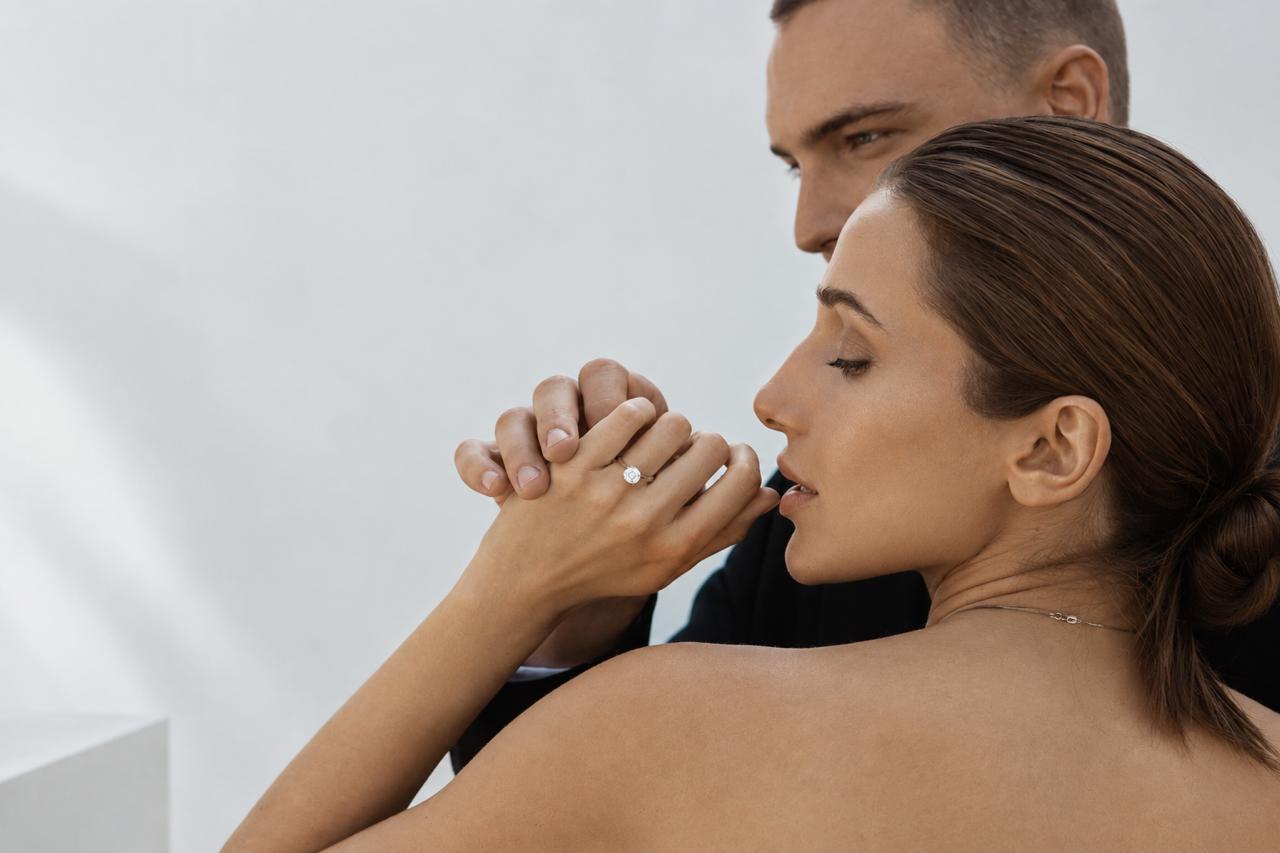
A proposal is one of those occasions you want to prepare for thoughtfully, without rushing or making random decisions. To find and choose an engagement ring with a lab-grown diamond that truly feels right, it is enough to follow several steps: determine your budget and preferred carat weight, choose the diamond shape and setting, discreetly find out the ring size, check the certification, and consider the production time in advance.
Lab-grown diamonds make this choice more flexible: with a similar budget, you can consider a larger stone or pay more attention to its characteristics, design, and setting. But the perfect engagement ring is not just about the carat weight. It should reflect the style of the person who will wear it every day — comfort matters, as does that feeling of love and recognition at first sight.
In this guide, we explain how to choose an engagement ring step by step — from the initial idea to the final check before placing an order, so you can make your choice with confidence and without unnecessary doubts.
Why a lab-grown diamond is a smart choice for an engagement ring
Choosing a diamond for an engagement ring often starts with the question of its origin. A lab-grown diamond has the same chemical structure, hardness, and optical properties as a natural diamond: it is a real diamond with the characteristic brilliance and play of light. The only difference is its origin.
The main practical advantage is the ability to allocate your budget more flexibly. Instead of spending the entire amount solely on the stone's weight, you can choose a larger carat, a more distinctive shape, a higher-quality setting, or create a custom piece — especially when selecting the metal, diamond, and setting for an engagement ring.
For many couples, the origin of the stone is an important part of the decision. SOLO for Diamonds offers jewelry featuring lab-grown diamonds, combining the timeless appeal of a classic engagement piece with a modern perspective on the origin of precious materials.
You can learn more about the technology and properties of these stones in the article what are lab-grown diamonds.
Step 1. Determine your budget and how many carats you can afford
Before choosing a specific design, it is worth determining your budget for the ring. This does not mean you need to decide on an exact amount down to the last hryvnia. A comfortable price range is enough — it will help narrow down your options and give you a realistic idea of the diamond characteristics you can consider.
One of the main parameters affecting the price is carat weight. At the same time, weight is not the only indicator of a diamond's beauty. Two stones of the same weight can look completely different depending on their shape, proportions, and cut.
For lab-grown diamonds, the budget often allows you to consider a larger center stone. As a general guide, the options can be divided into several categories:
-
0.5–1 ct — a delicate and versatile choice for those who prefer understated proportions;
-
1–1.5 ct — a noticeable center stone that works well in both a classic solitaire and a contemporary design;
-
1.5 ct and above — a statement center stone, especially striking in elongated shapes.
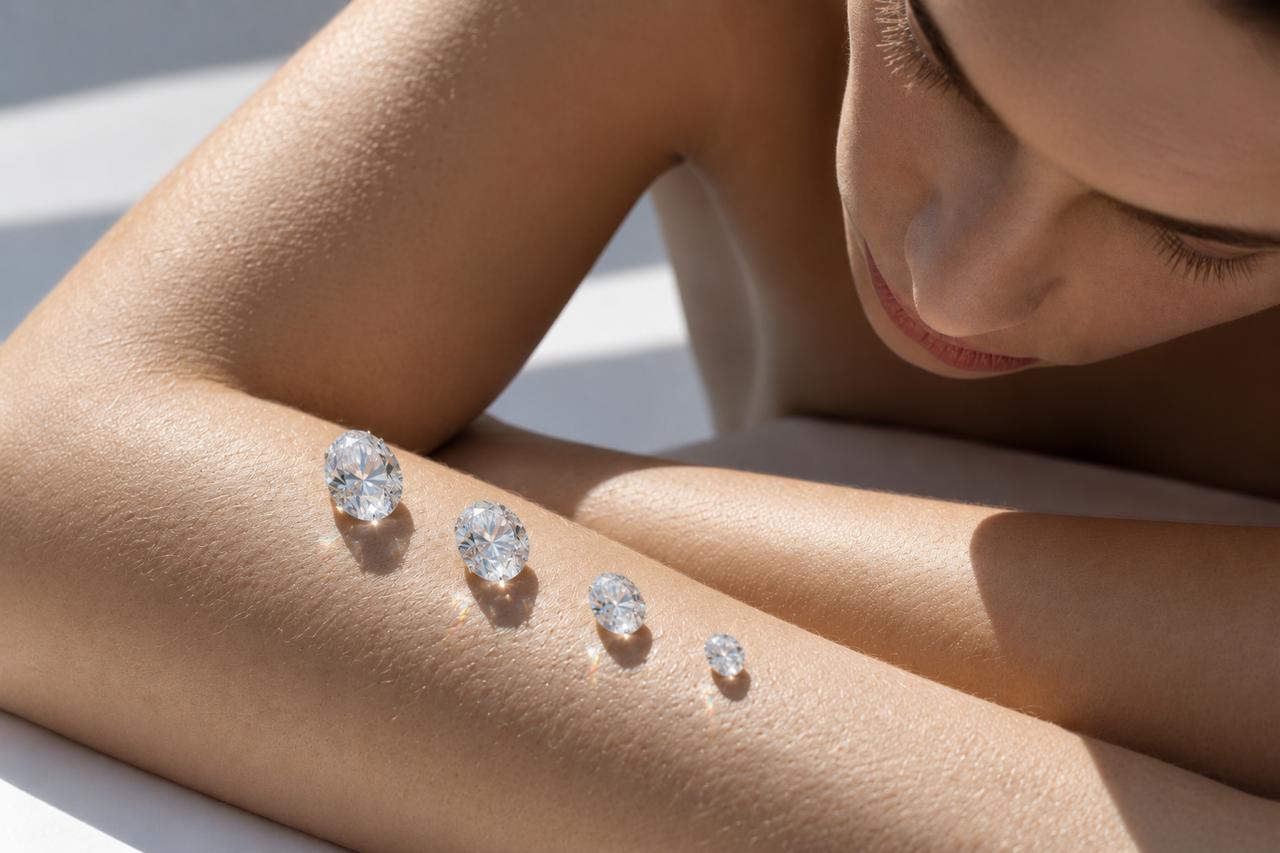
It is important to remember that the price does not increase strictly in proportion to carat weight. It is also influenced by color, clarity, cut, and shape. Therefore, instead of simply pursuing the largest possible stone, it is often better to find the right balance between all its characteristics.
When choosing a diamond for an engagement ring, think not only about how large it will be but also about how it will look on the hand. The ring should feel proportional and comfortable. The right shape and setting can make a stone appear larger without increasing its carat weight.
Step 2. Choose the diamond shape
The diamond shape is one of the first decisions that determines the character of the future ring. It creates the overall impression of the piece: classic, romantic, minimalist, or distinctly contemporary.
Beyond style, shape also affects how the size of the stone is perceived. Some diamonds appear larger because of their greater face-up surface area, while others concentrate their brilliance within a more compact silhouette.
The most popular shapes for engagement rings
Round cut. A classic that remains one of the most versatile choices for an engagement ring. A round diamond offers intense brilliance and pairs easily with different types of settings. It is a safe option if you are unsure about specific style preferences. You can learn more about its characteristics in the article round diamond cut.
-
Oval. One of the most popular contemporary shapes for engagement rings. Its elongated silhouette visually lengthens the finger and often creates the impression of a larger stone at the same carat weight while keeping the center diamond as the main focal point.
-
Cushion. Combines soft, rounded lines with distinctive facets. This shape has a romantic character and can look either classic or contemporary depending on the setting design. Learn more about this option in the article cushion cut.
-
Pear. A distinctive asymmetrical shape that combines a rounded end with a pointed tip. It can look particularly elegant when set vertically on the finger.
-
Princess. Defined by crisp square geometry, this shape is ideal for those who prefer modern minimalism and clean lines.
-
Emerald cut. A choice for those who appreciate understated elegance. Its large step-cut facets create a distinctive sense of depth and mirror-like reflections.
[products]
How shape affects the visual size of a diamond
The same carat weight does not always mean the same visual size. Elongated shapes — such as oval, pear, or marquise — have a larger face-up surface area, so they can appear visually larger than a round diamond of the same carat weight.
For this reason, diamond shape can be a way to optimize your budget. If you want a striking center stone without moving to a significantly higher carat weight, consider elongated silhouettes, especially if the visual impact of the ring is important to you.
At the same time, there is no shape that is objectively better than the others. The best choice is the one that matches the style of the person who will wear it. Look at the jewelry she already wears: does she prefer soft, rounded lines or geometric shapes, minimalism or more decorative designs? What feels naturally aligned with her style is likely to be the most thoughtful choice.
Step 3. Choose the setting
Even a perfectly selected diamond can look completely different depending on the setting it is placed in. The setting affects how much light reaches the diamond, how large the stone appears, and the overall character of the piece.
Three main setting styles are especially common for engagement rings.
Solitaire, halo, and side-stone: what is the difference?
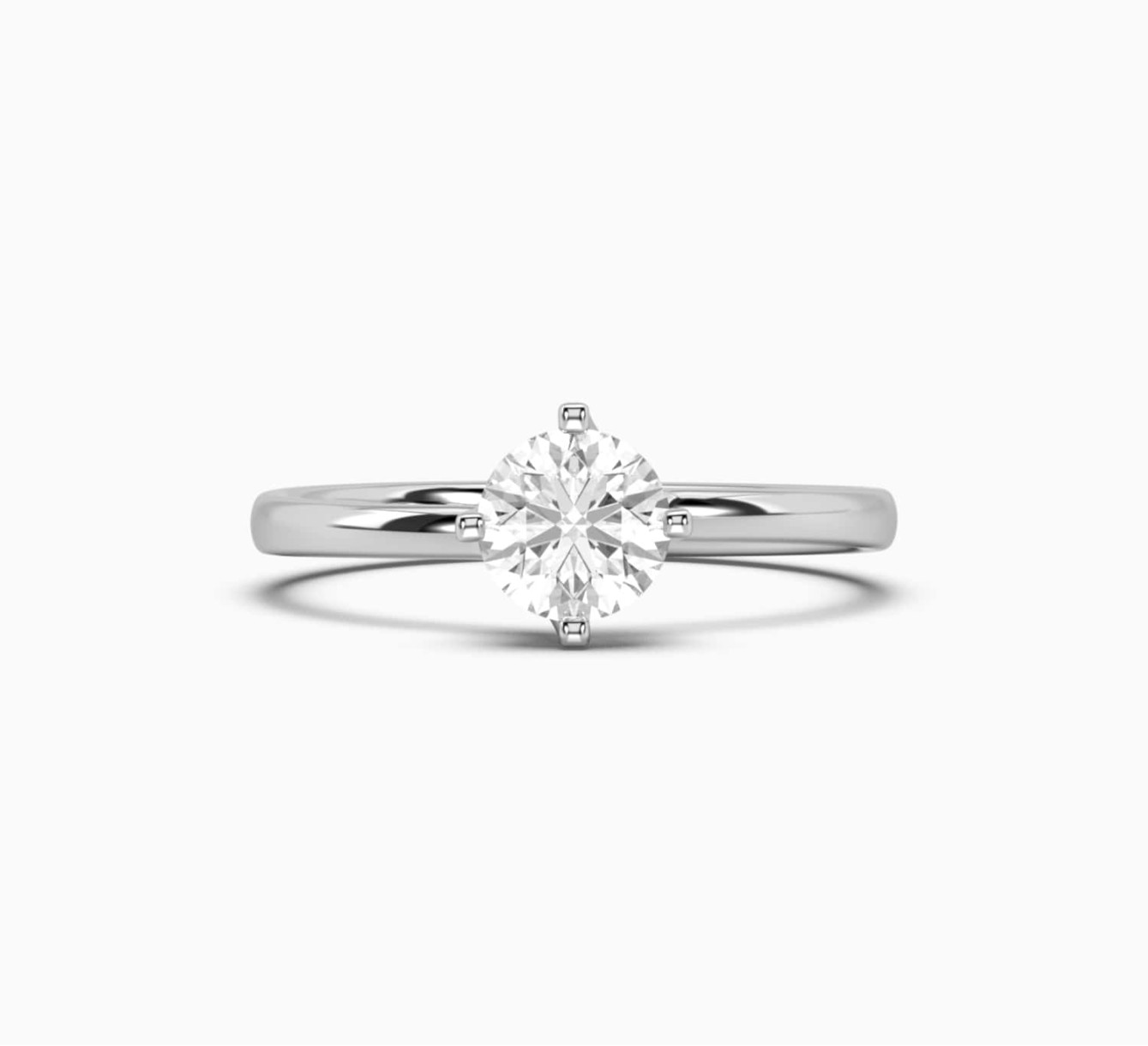
A solitaire is a classic design featuring a single center diamond. All attention is focused on the stone, making this style a good choice for minimalists, those who appreciate timeless elegance, and anyone looking for a classic proposal ring.
A halo setting features a center stone surrounded by smaller diamonds. This creates additional sparkle and can make the center stone appear visually larger. It is a good choice for those who prefer more expressive and decorative jewelry.
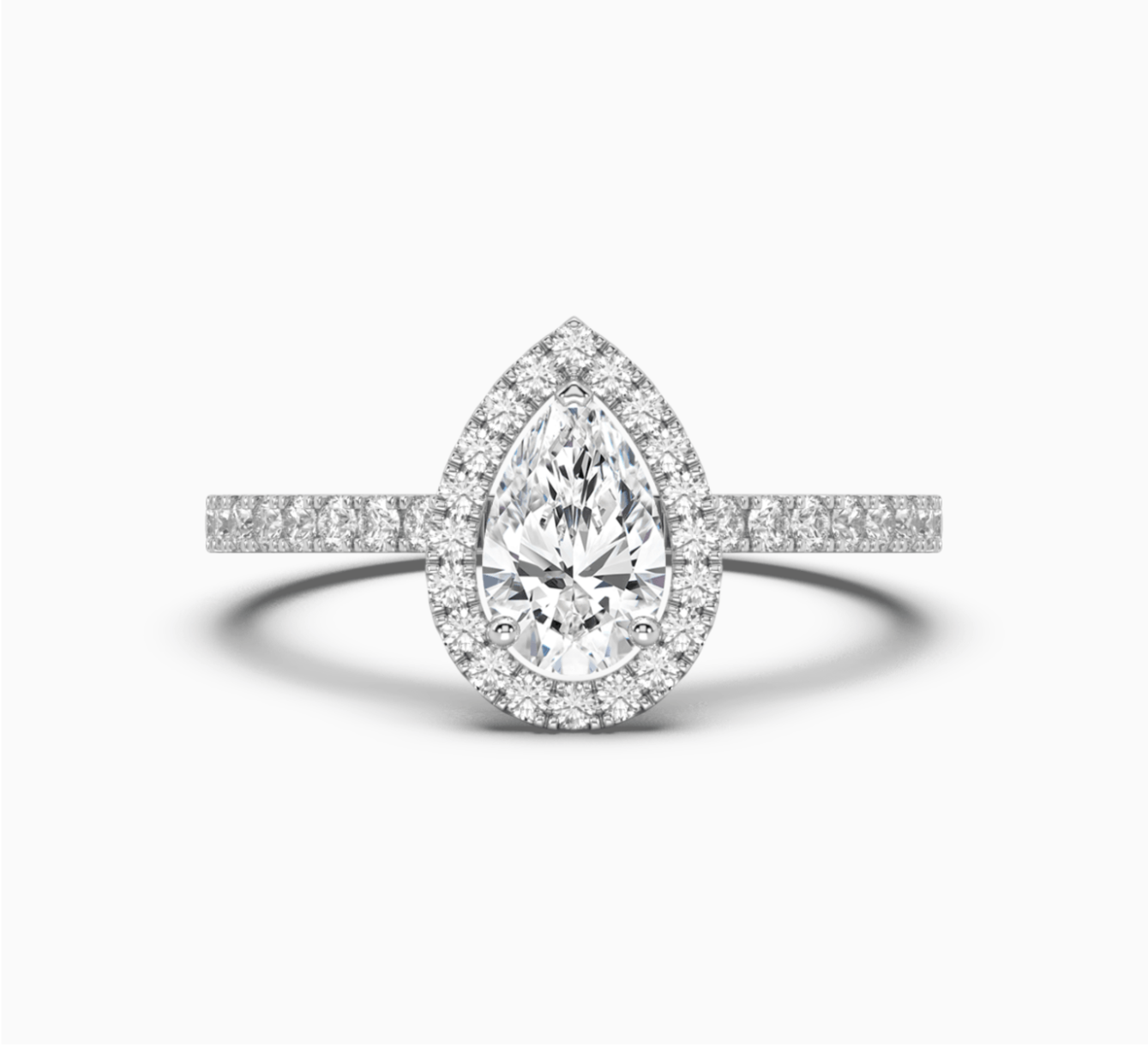
A side-stone design features a center diamond complemented by additional diamonds set along the band. This adds brilliance throughout the composition while keeping the center stone as the main focal point, making the engagement ring especially striking.
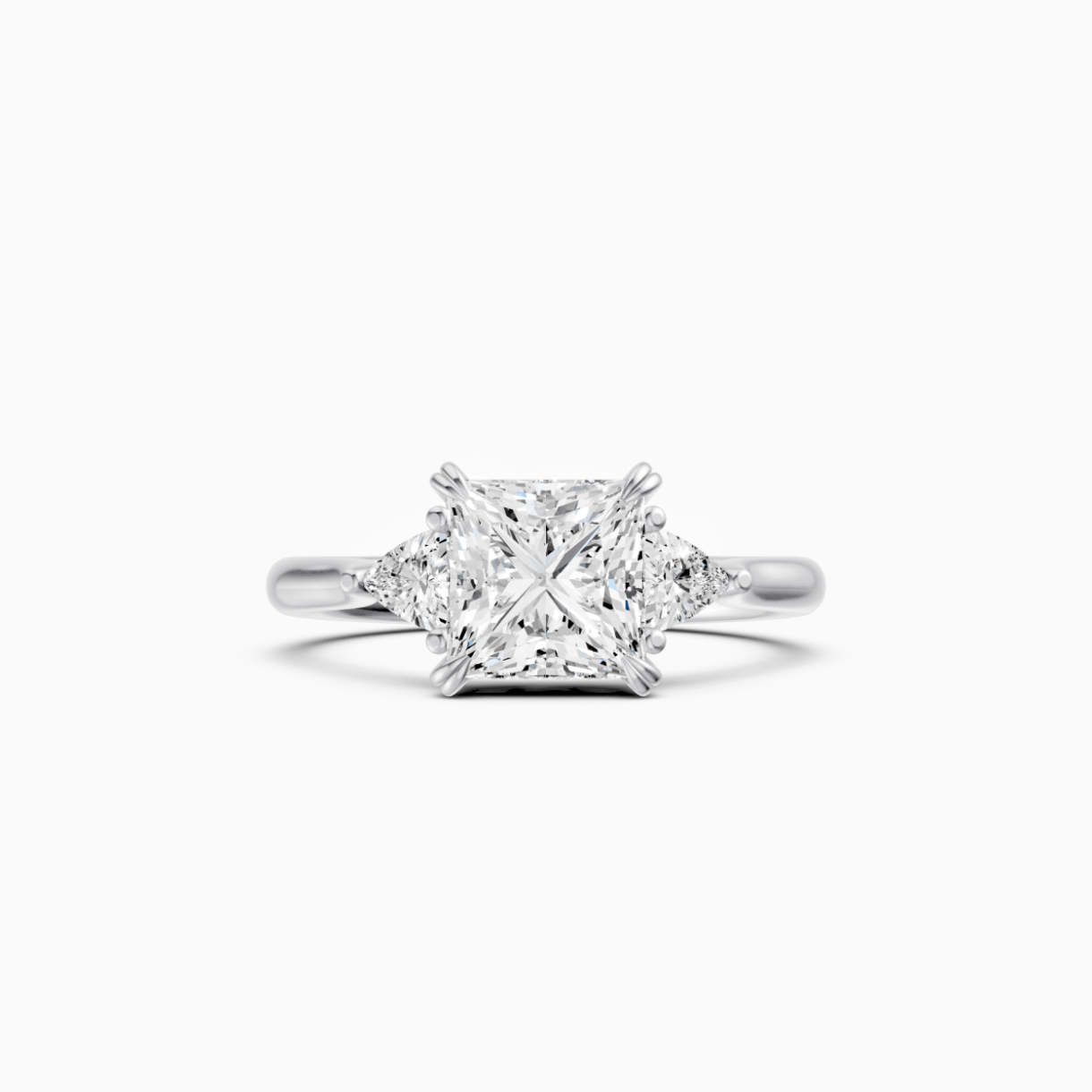
In short:
-
solitaire — maximum focus on the center diamond;
-
halo — more sparkle and a visually larger center;
-
side-stone — additional brilliance along the band.
If you are looking for understated elegance, consider a single-diamond ring. If you prefer a more elaborate composition, designs with a halo or side stones are worth considering.
How to choose the metal and gold color
The color of the metal has a significant impact on the overall appearance of the piece.
White gold has a refined, contemporary appearance and visually emphasizes the colorlessness of a diamond. It works well with minimalist designs and intricate settings featuring multiple stones, although silver-toned metals may require some maintenance and can change in appearance over time.
Yellow gold creates a warmer contrast and looks especially beautiful in classic designs. A solitaire in yellow gold can have a distinctive vintage or timeless character.
Rose gold is a softer, more romantic option that works well with delicate and unconventional designs.
The simplest approach is to look at the jewelry the person already wears. If her everyday collection consists mostly of white metals, a yellow-gold engagement ring may feel less natural with her style and may be harder to pair with her favorite pieces.
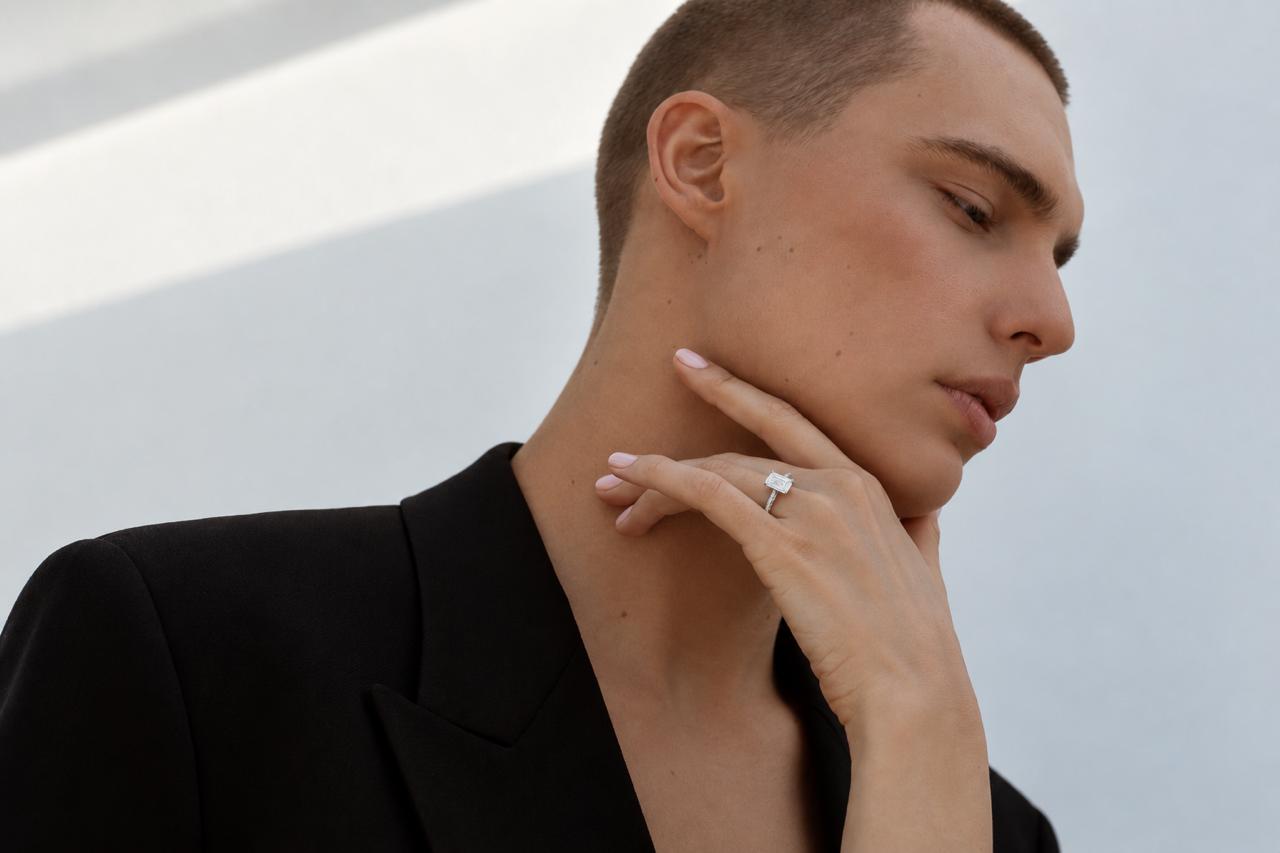
Step 4. Find out the ring size without giving away the surprise
Even the most beautiful ring needs to be comfortable. That is why ring size is one of the few technical details that is best to resolve before the proposal.
There are several ways to discreetly determine the right size:
-
Take a ring she already wears and measure its inside diameter.
-
Ask a close friend or sister for help.
-
Suggest trying on jewelry in a store under a neutral pretext.
-
Use a professional ring sizer with the help of a jewelry consultant.
-
If you are unsure about the exact size, choose a slightly larger size and clarify in advance whether resizing is possible.
It is also important to remember that finger size can change slightly depending on temperature, time of day, and other natural factors. Therefore, it is better not to rely on a single casual measurement.
At SOLO for Diamonds, rings are made to order, and the possibility of resizing afterward means that a small measurement error does not have to become a problem after the proposal.
Step 5. Check the certification and production time
Certification and timing are two details that are often considered too late. Once the proposal date has been set, it is important not only to find the desired design but also to make sure that the specific diamond has been independently evaluated.
What should be included in a GIA or IGI certificate?
For a lab-grown diamond, it is important to check a report issued by an independent gemological laboratory. The most common options are a GIA or IGI report.
Pay attention to:
-
a clear indication that the diamond is laboratory-grown;
-
the diamond's carat weight;
-
color and clarity characteristics;
-
cut information;
-
the individual report number;
-
laser inscription of the report number on the girdle, if applicable to the specific diamond.
The number on the diamond and the number on the report should match. It is also worth asking for real photos or videos of the exact stone that will be set in the ring rather than relying solely on general catalog images.
Certification allows you to understand the characteristics of the specific diamond rather than choosing it based only on appearance.
Learn more about the brand's quality standards on the SOLO for Diamonds quality guarantee page.
How much time should you allow for making the ring?
If you choose a ready-made model, the process may be simpler, making it easier to purchase the ring without waiting for production. However, a custom design requires time to discuss the details, select the diamond, and manufacture the piece.
The approximate production time for a custom ring may be 7–14 days, depending on the complexity of the design and the availability of the required stone. Rush orders should be discussed separately.
For a proposal, it is advisable to place the order at least two to three weeks before the planned date. This buffer gives you enough time to finalize the design without rushing, inspect the finished piece, and adjust the size if necessary.
Common mistakes when choosing an engagement ring
Even if you know a lot about diamonds, it is easy to focus on the wrong details when making such an important purchase. Here are the most common mistakes to avoid when choosing an engagement ring:
-
choosing based only on carat weight — a larger stone does not always look better than one with the right shape and proportions;
-
ignoring the future wearer's style — a trendy piece does not necessarily become a favorite;
-
purchasing a diamond without independent certification — its characteristics should be documented;
-
failing to check the specific diamond — photos and videos should show the exact stone that will be set in the ring;
-
leaving the order until the last minute — rushing limits your design options and leaves no time for adjustments;
-
underestimating the importance of the setting — the right setting can dramatically change how the stone is perceived;
-
trying to guess the ring size without any measurements — it is better to spend a little time finding out discreetly.
The biggest mistake is assuming there is a universal formula for the perfect engagement ring. For one person, it may be a large oval in a minimalist solitaire; for another, a delicate cushion with a halo setting. The right choice always starts with the individual's style and personality, as well as how comfortable the piece will be to wear every day.
Checklist before ordering an engagement ring
Before confirming the order for the proposal, go through this short checklist once more:
-
a comfortable budget and preferred carat weight have been determined;
-
the diamond shape and setting have been chosen;
-
the ring size has been confirmed or determined as accurately as possible;
-
the GIA or IGI report for the specific diamond has been checked;
-
the production time and a sufficient buffer before the proposal have been considered.
If all five points are covered, you are no longer simply choosing a beautiful piece of jewelry — you understand why this particular option is right for your story and your proposal moment.
The engagement ring at a glance
The perfect engagement ring with a lab-grown diamond is not about choosing the maximum possible carat weight, but about finding the right balance. The budget determines the possibilities, the shape and setting define the character of the piece, the size ensures comfort, and certification provides confidence in the diamond's characteristics.
A lab-grown diamond allows you to approach this choice more flexibly and focus on the details that matter to the person who will wear it. And planning the production time in advance helps preserve what matters most — peace of mind before the proposal itself.
Explore different styles and engagement rings in the SOLO for Diamonds catalog. If a ready-made model is not enough, you can also discuss a piece created specifically for your story.
FAQ
Is the lab-grown origin of the diamond stated on the certificate?
How much does an engagement ring with a lab-grown diamond cost?
Can I order a custom-designed engagement ring?
What if the ring size is slightly off after the proposal?


you may also be interested in
14.08.26
7 myths about lab-grown diamonds that are time to dispelAre lab-grown diamonds real or not? We explain in simple terms how they differ from natural diamonds and what to consider when choosing a piece of jewelry. We separate facts from common misconceptions to help you better understand the stone and make an informed choice.
read22.07.26
Diamond engagement ring. A tradition that became a symbol of loveA marriage proposal is one of the most important moments in the lives of two people. Today, it is almost impossible to imagine it without a piece of jewelry that has become a universal symbol of commitment, trust, and the desire to build a future together.
read05.08.26
What are lab-grown diamonds: a complete guide in simple wordsLab-grown diamonds are real gemstones that differ from natural diamonds only by their origin. Discover everything you need to know about HPHT and CVD technologies, certification, differences from natural diamonds, and key factors to consider when choosing a diamond.
read05.08.26
HPHT vs. CVD: how are diamonds really grown in a laboratory?Discover how modern technology transforms carbon into a real diamond, the stages each crystal goes through, and the key differences between the HPHT and CVD growing methods.
read whatsapp
 Telegram
 EMail
EMail